 Skip to content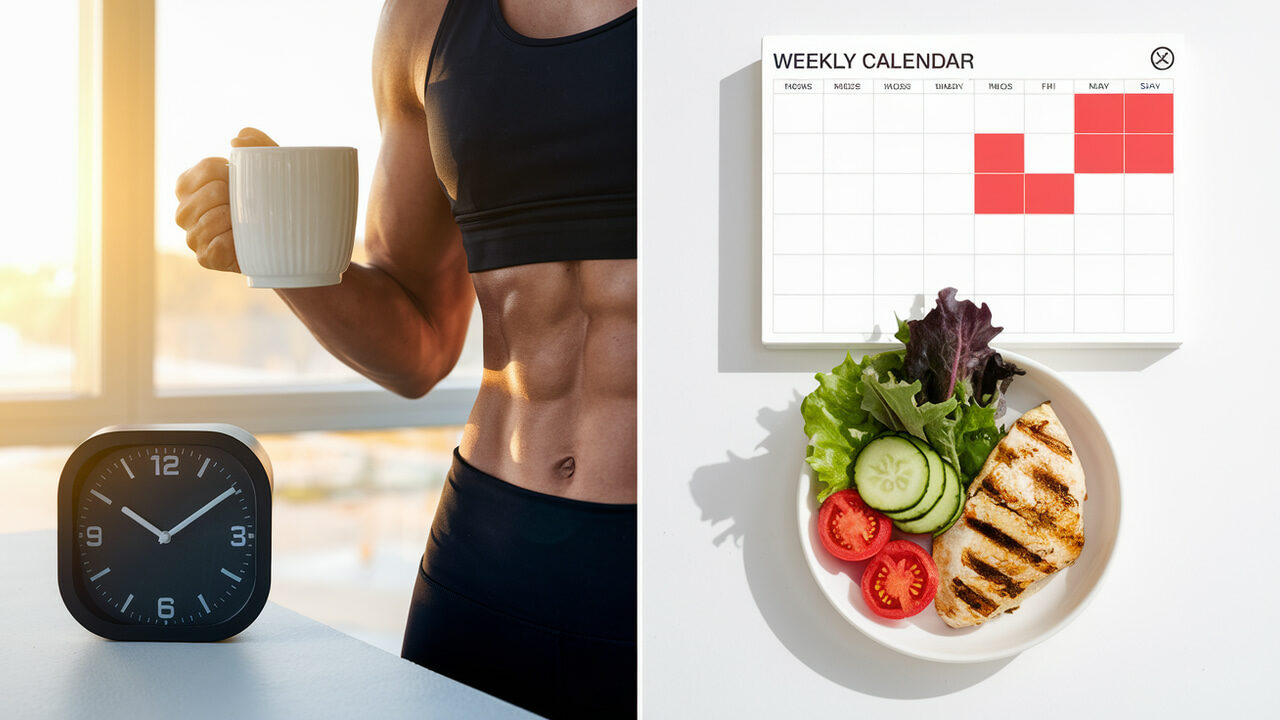
16:8 Fasting vs 5:2 Diet: Which Intermittent Fasting Method Suits You?
What You’ll Learn
In this comprehensive comparison, we’ll delve into:
– The structural differences between 16:8 Fasting and 5:2 Diet
– How each method integrates with various lifestyles
– The health benefits and scientific evidence supporting both
– Potential drawbacks to consider
– Which method aligns best with your personal goals and routines
Quick Comparison Table
| Feature | 16:8 Fasting | 5:2 Diet |
|---|---|---|
| Diet Structure | 16 hours fasting, 8 hours eating window daily | Normal eating 5 days, 500–600 calories on 2 non-consecutive days per week |
| Flexibility | Fixed daily schedule | Flexible fasting days, adaptable to social events |
| Health Benefits | Weight loss, improved insulin sensitivity, metabolic health | Weight loss, improved insulin sensitivity, heart health |
| Scientific Evidence | Growing evidence on fat loss, blood pressure control | Strong evidence on insulin response, weight loss |
| Potential Drawbacks | Hunger during fasting periods, potential overeating during eating window | Discipline required on fasting days, possible overeating on non-fasting days |
| Suitability | Routine-oriented individuals, early risers | Busy professionals, social eaters |
Overview of 16:8 Fasting
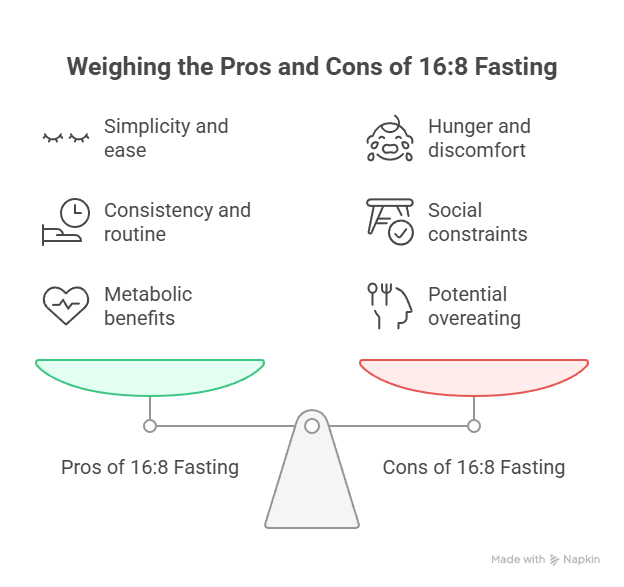
16:8 Fasting, also known as the Leangains protocol, involves fasting for 16 hours each day and consuming all meals within an 8-hour window. This method is particularly appealing to those who prefer a consistent daily routine.
Pros
– **Simplicity**: A straightforward daily schedule without the need to count calories.
– **Consistency**: Establishes a regular eating pattern, which can be easier to maintain.
– **Metabolic Benefits**: May improve insulin sensitivity and support metabolic health.
Cons
– **Hunger**: Extended fasting periods can lead to significant hunger, especially during the initial adaptation phase.
– **Social Constraints**: The fixed eating window may interfere with social events or family meals.
– **Potential Overeating**: There’s a risk of consuming excessive calories during the eating window, potentially negating the benefits.
Overview of 5:2 Diet
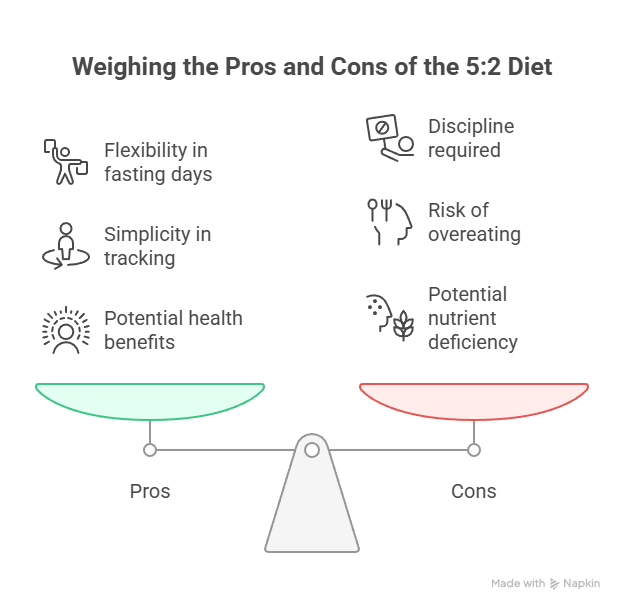
The 5:2 Diet, popularized by Dr. Michael Mosley, involves eating normally five days a week and restricting calorie intake to 500–600 calories on two non-consecutive days. This approach offers flexibility and can be easier to integrate into various lifestyles.
Pros
– **Flexibility**: Choose which days to fast, allowing adaptation to social events and personal schedules.
– **Simplicity**: No need to track daily calorie intake; focus is on fasting days.
– **Health Benefits**: Associated with weight loss, improved insulin sensitivity, and potential heart health benefits.
Cons
– **Discipline Required**: Maintaining low calorie intake on fasting days can be challenging.
– **Overeating Risk**: There’s a temptation to overeat on non-fasting days, which can offset the calorie deficit.
– **Potential Nutrient Deficiency**: If not planned carefully, fasting days may lead to insufficient nutrient intake.
Side-by-Side Breakdown
Diet Structure
– **16:8 Fasting**: Involves a daily 16-hour fasting period followed by an 8-hour eating window. This method is ideal for individuals who prefer a consistent daily routine and can manage longer fasting periods.
– **5:2 Diet**: Consists of normal eating five days a week and calorie restriction (500–600 calories) on two non-consecutive days. This approach offers flexibility, making it suitable for people with varying daily schedules or social commitments who can handle occasional calorie restriction.
Flexibility and Lifestyle Integration
– **16:8 Fasting**: Offers a fixed daily schedule, which can be beneficial for those who thrive on routine. However, it may pose challenges during social events or family gatherings that fall outside the eating window.
– **5:2 Diet**: Provides flexibility in choosing fasting days, allowing individuals to adapt their fasting schedule around social events and personal commitments. This adaptability can make it easier to maintain over time.
Health Benefits
– **16:8 Fasting**: May lead to weight loss, improved insulin sensitivity, and enhanced metabolic health. Some studies suggest it can also aid in blood pressure control.
– **5:2 Diet**: Associated with weight loss, improved insulin sensitivity, and potential heart health benefits. Research indicates it may positively affect cholesterol levels and reduce the risk of cardiovascular diseases.
Scientific Evidence
– **16:8 Fasting**: Growing evidence supports its effectiveness in fat loss and blood pressure control. However, more long-term studies are needed to fully understand its impact on overall health.
– **5:2 Diet**: Strong evidence exists regarding its influence on insulin response and weight loss. Studies have shown significant reductions in body weight and improvements in insulin sensitivity among participants.
Potential Drawbacks
– **16:8 Fasting**: Extended fasting periods can lead to hunger, and there’s a risk of overeating during the eating window, potentially negating the benefits.
– **5:2 Diet**: Requires discipline on fasting days, and there’s a possibility of overeating on non-fasting days, which can offset the calorie deficit.
Suitability for Specific Audiences
– **16:8 Fasting**: Best suited for individuals seeking a daily routine with consistent eating windows, such as those who prefer a structured schedule and can manage longer fasting periods.
– **5:2 Diet**: Ideal for people desiring flexibility in their eating patterns, like those with varying daily schedules or social commitments, who can handle occasional calorie restriction.
Which One Should You Choose?
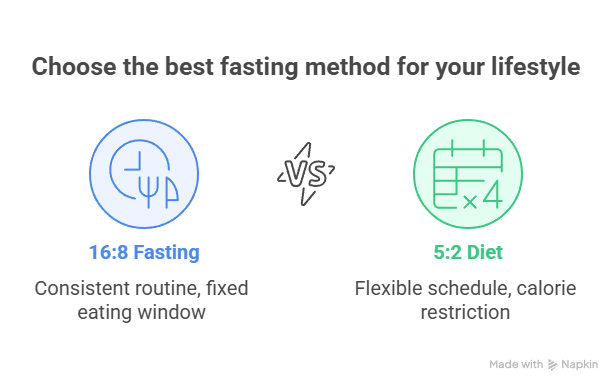
Your choice between 16:8 Fasting and 5:2 Diet should align with your personal lifestyle, health goals, and ability to adhere to the fasting regimen.
– **Choose 16:8 Fasting if**:
– You prefer a consistent daily routine.
– You can manage longer fasting periods without significant discomfort.
– Your social and work schedules can accommodate a fixed eating window.
– **Choose 5:2 Diet if**:
– You need flexibility in your eating schedule.
– You can commit to calorie restriction on fasting days.
– Your lifestyle includes varying daily routines and social events.
16:8 Fasting vs 5:2 Diet: The Final Verdict
| Category | 16:8 Fasting | 5:2 Diet |
|————————–|————–|———-|
| Best for Beginners | | ✓ |
| Best for Power Users | ✓ | |
| Best Value | | |
Findings and Recap
Both 16:8 Fasting and 5:2 Diet offer unique benefits and challenges. Your choice should be guided by your personal preferences, health objectives, and lifestyle compatibility.
Start Your Fasting Journey TodayExplore more about intermittent fasting and find the method that best suits your needs.
Related reading: Understanding Intermittent Fasting: A Comprehensive Guide
AI Image Prompt: A split-screen image showing a person following a 16:8 Fasting schedule on one side and a 5:2 Diet plan on the other, with visual representations of each method’s structure and benefits.
“`html
Frequently Asked Questions
What is the main difference between 16:8 Fasting and 5:2 Fasting?
The primary distinction lies in their structure. 16:8 Fasting involves daily time-restricted eating, where you fast for 16 hours and eat during an 8-hour window each day. In contrast, 5:2 Fasting entails eating normally for five days of the week and significantly reducing calorie intake (to 500–600 calories) on two non-consecutive days. ([medstarhealth.org](https://www.medstarhealth.org/blog/intermittent-fasting-faq?utm_source=openai))
Which fasting method is more sustainable in the long term?
The 16:8 method is often considered more sustainable due to its daily routine, allowing individuals to incorporate fasting into their regular lifestyle without significant disruption. ([businessinsider.com](https://www.businessinsider.com/best-worst-intermittent-fasting-types-2018-9?utm_source=openai))
Can I consume beverages during the fasting periods?
Yes, during fasting periods, you can consume non-caloric beverages such as water, black coffee, or herbal teas. It’s important to avoid adding sugar or cream to these drinks to maintain the fasting state. ([health.clevelandclinic.org](https://health.clevelandclinic.org/intermittent-fasting-4-different-types-explained%26n931821%3Dv913068?utm_source=openai))
Are there specific foods recommended for the fasting days in the 5:2 method?
On fasting days, it’s advisable to consume low-calorie, nutrient-dense foods like vegetables, lean proteins, and whole grains to ensure adequate nutrition while adhering to calorie restrictions. ([debbiedeannutrition.com](https://www.debbiedeannutrition.com/post/decoding-the-popular-intermittent-fasting-plans-should-you-choose-5-2-or-16-8?utm_source=openai))
Is intermittent fasting suitable for everyone?
Intermittent fasting may not be suitable for everyone, especially individuals with certain health conditions, pregnant or breastfeeding women, and those with a history of eating disorders. It’s essential to consult with a healthcare professional before starting any fasting regimen. ([health.clevelandclinic.org](https://health.clevelandclinic.org/intermittent-fasting-4-different-types-explained%26n931821%3Dv913068?utm_source=openai))
Can I exercise during fasting periods?
Light to moderate exercise is generally safe during fasting periods. However, intense workouts may be more challenging due to reduced energy availability. It’s important to listen to your body and adjust your exercise routine accordingly. ([health.clevelandclinic.org](https://health.clevelandclinic.org/intermittent-fasting-4-different-types-explained%26n931821%3Dv913068?utm_source=openai))
How quickly can I expect to see results from intermittent fasting?
Results from intermittent fasting can vary based on individual factors such as metabolism, adherence to the fasting schedule, and overall lifestyle. Some individuals may notice changes within a few weeks, while others may take longer. Consistency and patience are key to achieving desired outcomes. ([health.clevelandclinic.org](https://health.clevelandclinic.org/intermittent-fasting-4-different-types-explained%26n931821%3Dv913068?utm_source=openai))
“`
