 Skip to content
Clean Fasting vs Dirty Fasting: Which Is Right for You?
What You’ll Learn
In this article, we’ll delve into the distinctions between Clean Fasting and Dirty Fasting, examining their definitions, health benefits, ease of adherence, impact on metabolic processes, and how they integrate into various lifestyles. By the end, you’ll have a clear understanding of which fasting method aligns best with your personal health goals and daily routine.
Quick Comparison Table
| Feature | Clean Fasting | Dirty Fasting |
|---|---|---|
| Caloric Intake | Zero calories during fasting periods | Up to 50 calories from specific sources |
| Allowed Substances | Water, black coffee, herbal teas | Milk, sweeteners, bone broth, certain supplements |
| Health Benefits | Enhanced insulin sensitivity, autophagy, metabolic health | Potential weight loss benefits, but lacks evidence for similar health benefits |
| Ease of Adherence | May be challenging due to strictness | More flexible, potentially easier to adhere to |
| Impact on Metabolic Processes | Induces ketosis and autophagy | May not fully activate ketosis and autophagy due to caloric intake |
Overview of Clean Fasting
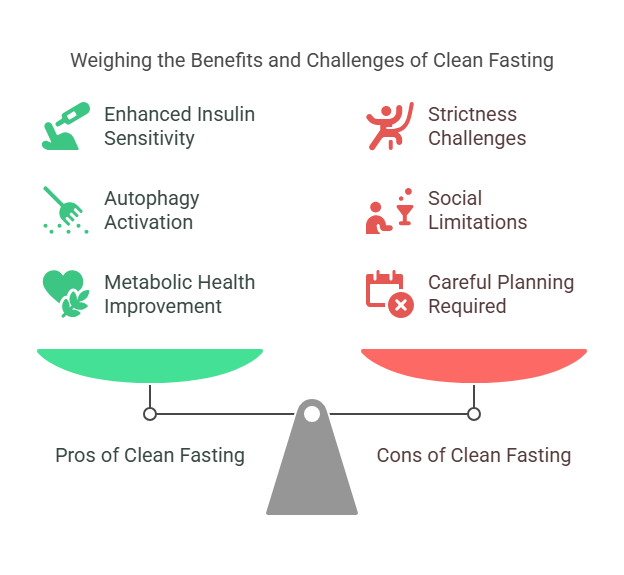
Clean Fasting involves abstaining from all caloric intake during fasting periods, allowing only water, black coffee, and herbal teas. This strict approach aims to maximize the health benefits associated with fasting.
Pros
– **Enhanced Insulin Sensitivity**: Clean Fasting can improve insulin sensitivity, aiding in better blood sugar control. ([drjbkirby.com](https://drjbkirby.com/clean-fasting-uncovered/?utm_source=openai))
– **Autophagy Activation**: The absence of caloric intake stimulates autophagy, the body’s process of cleaning out damaged cells. ([drjbkirby.com](https://drjbkirby.com/clean-fasting-uncovered/?utm_source=openai))
– **Metabolic Health Improvement**: Regular Clean Fasting may lead to improved metabolic health, including better lipid profiles and reduced inflammation. ([bariatricstation.com](https://www.bariatricstation.com/intermittent-fasting/clean-fast-vs-dirty-fast/?utm_source=openai))
Cons
– **Strictness**: The zero-calorie rule can be challenging for those new to fasting or individuals with demanding schedules.
– **Social Limitations**: Participating in social events or dining out may require careful planning to adhere to Clean Fasting protocols.
Overview of Dirty Fasting
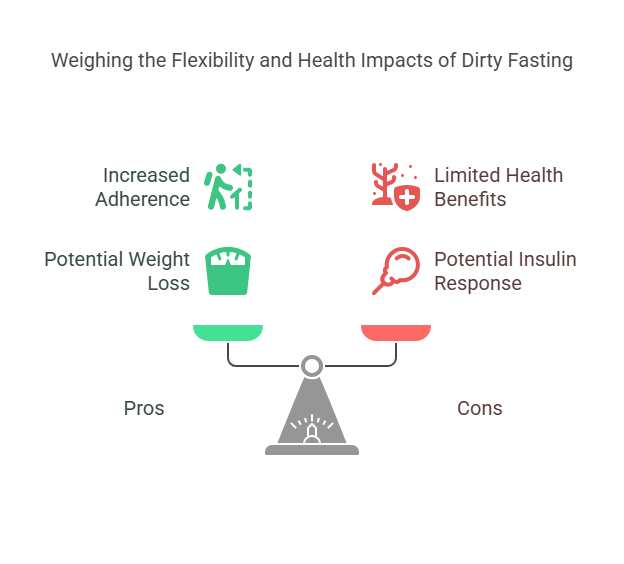
Dirty Fasting allows for the consumption of small amounts of calories—typically under 50—from specific sources during fasting periods. This approach offers more flexibility, which may make fasting more accessible for some individuals.
Pros
– **Increased Adherence**: The flexibility to consume certain foods and beverages can make it easier for individuals to stick with a fasting regimen. ([healthline.com](https://www.healthline.com/nutrition/dirty-fasting?utm_source=openai))
– **Potential Weight Loss**: By reducing overall calorie intake, Dirty Fasting may contribute to weight loss. ([healthline.com](https://www.healthline.com/nutrition/dirty-fasting?utm_source=openai))
Cons
– **Limited Health Benefits**: Dirty Fasting may not provide the same health benefits as Clean Fasting, such as enhanced insulin sensitivity and autophagy. ([healthline.com](https://www.healthline.com/nutrition/dirty-fasting?utm_source=openai))
– **Potential for Insulin Response**: Consuming calories, even in small amounts, can trigger an insulin response, potentially disrupting the fasting state. ([healthline.com](https://www.healthline.com/nutrition/dirty-fasting?utm_source=openai))
Side-by-Side Breakdown
Caloric Intake
– **Clean Fasting**: Strictly prohibits any caloric intake during fasting periods, allowing only non-caloric beverages.
– **Dirty Fasting**: Permits up to 50 calories from specific sources, such as milk, sweeteners, or bone broth. ([healthline.com](https://www.healthline.com/nutrition/dirty-fasting?utm_source=openai))
Allowed Substances
– **Clean Fasting**: Only water, black coffee, and herbal teas are permitted.
– **Dirty Fasting**: Allows additions like milk, sweeteners, bone broth, and certain supplements. ([healthline.com](https://www.healthline.com/nutrition/dirty-fasting?utm_source=openai))
Health Benefits
– **Clean Fasting**: Associated with enhanced insulin sensitivity, autophagy, and improved metabolic health. ([drjbkirby.com](https://drjbkirby.com/clean-fasting-uncovered/?utm_source=openai))
– **Dirty Fasting**: May offer weight loss benefits but lacks evidence for similar health benefits. ([healthline.com](https://www.healthline.com/nutrition/dirty-fasting?utm_source=openai))
Ease of Adherence
– **Clean Fasting**: The strictness may be challenging for some individuals, especially those new to fasting.
– **Dirty Fasting**: More flexible, potentially easier to adhere to, especially for beginners. ([healthline.com](https://www.healthline.com/nutrition/dirty-fasting?utm_source=openai))
Impact on Metabolic Processes
– **Clean Fasting**: More likely to induce ketosis and autophagy due to the absence of caloric intake. ([drjbkirby.com](https://drjbkirby.com/clean-fasting-uncovered/?utm_source=openai))
– **Dirty Fasting**: May not fully activate ketosis and autophagy due to caloric intake. ([healthline.com](https://www.healthline.com/nutrition/dirty-fasting?utm_source=openai))
Which One Should You Choose?
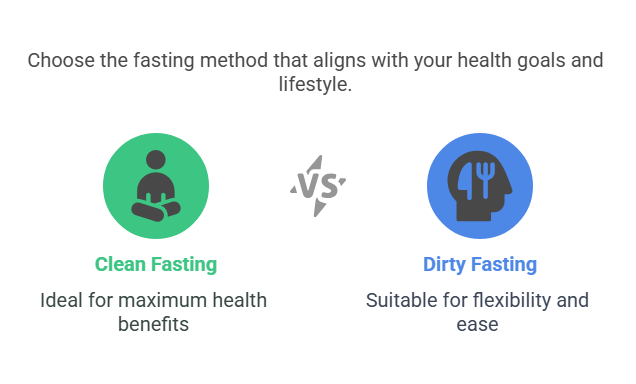
Your choice between Clean Fasting and Dirty Fasting should align with your health goals, lifestyle, and personal preferences.
– **Clean Fasting**: Ideal for individuals seeking maximum health benefits from fasting, including enhanced insulin sensitivity, autophagy, and metabolic health.
– **Dirty Fasting**: Suitable for those new to fasting or individuals who find strict fasting challenging, seeking a more flexible approach to intermittent fasting.
Clean Fasting vs Dirty Fasting: The Final Verdict
| Category | Clean Fasting | Dirty Fasting |
|---|---|---|
| Best for Beginners | ✔️ | |
| Best for Power Users | ✔️ | |
| Best Value | ✔️ |
Findings and Recap
In summary, Clean Fasting offers more significant health benefits, including improved insulin sensitivity and autophagy, but requires strict adherence, which may be challenging for some. Dirty Fasting provides a more flexible approach, potentially making it easier to adhere to, but may not offer the same health benefits as Clean Fasting.
Related reading: Understanding Intermittent Fasting: A Comprehensive Guide
AI Image Prompt: A split-screen image showing a person choosing between two fasting methods: one side depicting Clean Fasting with water and black coffee, and the other side showing Dirty Fasting with coffee containing milk and a slice of lemon water, set in a modern kitchen environment.
“`html
Frequently Asked Questions
What is the main difference between Clean Fasting and Dirty Fasting?
Clean Fasting involves abstaining from all calorie-containing foods and beverages during the fasting period, consuming only water, black coffee, or herbal tea. In contrast, Dirty Fasting permits the intake of small amounts of calories—typically under 50 calories—such as adding milk or sweeteners to coffee, consuming bone broth, or using artificial sweeteners. ([healthline.com](https://www.healthline.com/nutrition/dirty-fasting?utm_source=openai))
Does Dirty Fasting break the fast?
While Dirty Fasting allows minimal calorie intake, it may not maintain the physiological state of fasting. Consuming calories, even in small amounts, can trigger insulin responses and disrupt processes like autophagy, which are central to the benefits of fasting. ([healthline.com](https://www.healthline.com/nutrition/dirty-fasting?utm_source=openai))
Which fasting method is more effective for weight loss?
Clean Fasting is generally considered more effective for weight loss, as it ensures the body remains in a fasted state, promoting fat burning and metabolic health. Dirty Fasting, while allowing some calorie intake, may not provide the same level of benefits due to potential disruptions in the fasting state. ([drjbkirby.com](https://drjbkirby.com/clean-fasting-uncovered/?utm_source=openai))
Can I drink coffee or tea during Clean Fasting?
Yes, during Clean Fasting, you can consume black coffee or plain herbal tea without any additives like milk, sugar, or sweeteners. These beverages are low in calories and do not significantly impact insulin levels, allowing you to maintain the fasting state. ([fastingqueens.com](https://www.fastingqueens.com/what-can-you-drink-during-fasting-clean-vs-dirty-fasting/?utm_source=openai))
Is Dirty Fasting suitable for beginners?
Dirty Fasting may be more manageable for individuals new to fasting, as it allows for minimal calorie intake, potentially reducing feelings of deprivation. However, it’s important to understand that this approach may not provide the full range of benefits associated with Clean Fasting. ([healthline.com](https://www.healthline.com/nutrition/dirty-fasting?utm_source=openai))
Can I use artificial sweeteners during Dirty Fasting?
Yes, Dirty Fasting permits the use of artificial sweeteners, such as aspartame, Splenda, or stevia, in small amounts. However, it’s important to note that the impact of these sweeteners on insulin levels and the fasting state is still a subject of ongoing research. ([fitnessvolt.com](https://fitnessvolt.com/clean-vs-dirty-fasting/?utm_source=openai))
Which fasting method is better for overall health benefits?
Clean Fasting is generally considered more effective for achieving health benefits beyond weight loss, such as improved insulin sensitivity, reduced inflammation, and enhanced cellular repair processes. By maintaining a true fasted state, Clean Fasting supports these physiological processes more effectively than Dirty Fasting. ([drjbkirby.com](https://drjbkirby.com/clean-fasting-uncovered/?utm_source=openai))
“`
