 Skip to content
Dry Fasting vs Water Fasting: Which Is Right for You?
What You’ll Learn
In this article, we’ll delve into the distinctions between Dry Fasting and Water Fasting, examining their benefits, risks, and suitability for various health objectives. By the end, you’ll have a clear understanding to make an informed decision.
Quick Comparison Table
| Feature | Dry Fasting | Water Fasting |
|---|---|---|
| Hydration Status | No water intake, leading to dehydration risks. | Water intake allowed, maintaining hydration. |
| Health Risks | Higher risks including severe dehydration, kidney damage, and electrolyte imbalances. | Risks include electrolyte imbalance and muscle loss, but generally safer. |
| Duration and Intensity | More intense, typically practiced for shorter durations. | Less intense, can be sustained longer. |
Overview of Dry Fasting
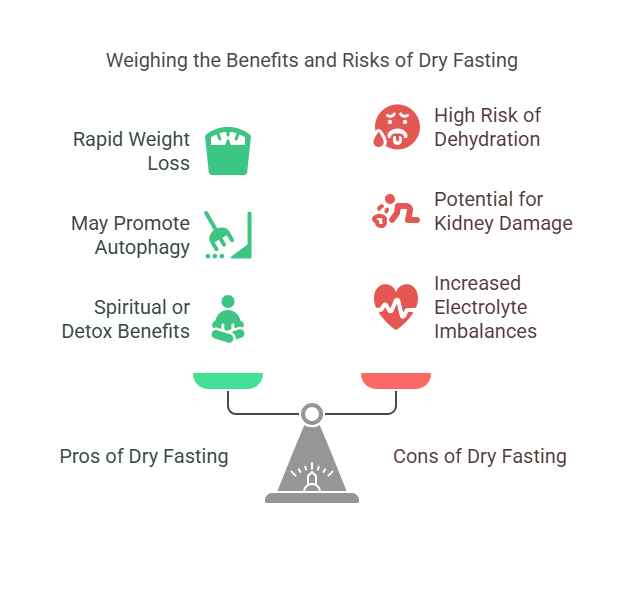
Dry Fasting involves abstaining from both food and water for a set period. This practice is often associated with rapid weight loss and is sometimes used for spiritual or detoxification purposes.
Pros
– Potential for rapid weight loss due to calorie and water restriction.
– May promote autophagy, the body’s process of cleaning out damaged cells.
Cons
– High risk of dehydration, leading to symptoms like dizziness, fatigue, and headaches.
– Potential for kidney damage due to lack of hydration.
– Increased risk of electrolyte imbalances, which can affect heart and muscle function.
Overview of Water Fasting
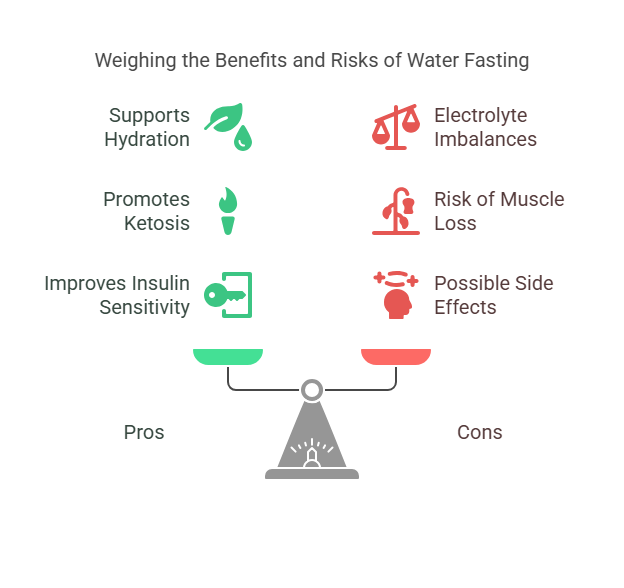
Water Fasting involves abstaining from food while allowing water intake. This method is more commonly practiced and is often used for weight loss and metabolic health improvement.
Pros
– Supports hydration, aiding in kidney function and waste elimination.
– Promotes ketosis, where the body burns fat for energy, supporting fat loss.
– May improve insulin sensitivity, reducing the risk of type 2 diabetes.
Cons
– Potential for electrolyte imbalances, especially during extended fasts.
– Risk of muscle loss if protein intake is insufficient.
– Possible side effects include dizziness, fatigue, and low blood sugar levels.
Side-by-Side Breakdown
Hydration Status
– **Dry Fasting**: No water intake, leading to dehydration risks.
– **Water Fasting**: Water intake allowed, maintaining hydration.
Health Risks
– **Dry Fasting**: Higher risks including severe dehydration, kidney damage, and electrolyte imbalances.
– **Water Fasting**: Risks include electrolyte imbalance and muscle loss, but generally safer.
Duration and Intensity
– **Dry Fasting**: More intense, typically practiced for shorter durations.
– **Water Fasting**: Less intense, can be sustained longer.
Which One Should You Choose?
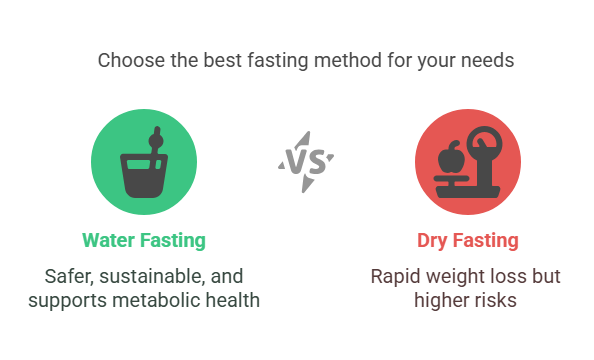
Your choice between Dry Fasting and Water Fasting should align with your health goals, risk tolerance, and personal circumstances.
– **Best for Beginners**: Water Fasting is generally safer and more sustainable, making it suitable for those new to fasting.
– **Best for Rapid Weight Loss**: Dry Fasting may lead to quicker weight loss but comes with higher risks and is not recommended without medical supervision.
– **Best for Metabolic Health**: Water Fasting supports hydration and may improve insulin sensitivity, beneficial for metabolic health.
Dry Fasting vs Water Fasting: The Final Verdict
| Category | Dry Fasting | Water Fasting |
|---|---|---|
| Best for Beginners | ✔️ | |
| Best for Rapid Weight Loss | ✔️ | |
| Best for Metabolic Health | ✔️ |
Findings and Recap
Both Dry Fasting and Water Fasting have their respective benefits and risks. It’s crucial to consider your health status, goals, and consult with a healthcare professional before embarking on any fasting regimen.
Ready to Start Your Fasting Journey?
Explore our comprehensive guide on safe fasting practices and find the best approach for your health goals.
Related reading: Understanding Intermittent Fasting: A Beginner’s Guide
AI Image Prompt: A split-screen image showing a person holding a glass of water on one side and a person with a dry mouth on the other, symbolizing the choice between Water Fasting and Dry Fasting.
“`html
Frequently Asked Questions
What is the main difference between Dry Fasting and Water Fasting?
The primary distinction lies in fluid intake. Dry Fasting involves abstaining from both food and liquids, including water, while Water Fasting permits the consumption of water but restricts solid food intake. This means that during Dry Fasting, no fluids are consumed, whereas Water Fasting allows for hydration through water. ([health.clevelandclinic.org](https://health.clevelandclinic.org/dry-fasting?utm_source=openai))
What are the potential benefits of Dry Fasting?
Advocates of Dry Fasting claim it can lead to weight loss, enhanced immune function, reduced inflammation, and delayed aging. However, it’s important to note that these benefits are largely anecdotal, and scientific evidence supporting Dry Fasting is limited. ([health.clevelandclinic.org](https://health.clevelandclinic.org/dry-fasting?utm_source=openai))
What are the risks associated with Dry Fasting?
Dry Fasting poses significant health risks, primarily due to dehydration. Potential complications include kidney issues, fatigue, irritability, headaches, decreased urination, and constipation. Prolonged Dry Fasting can also lead to more severe health problems, such as organ damage. ([health.clevelandclinic.org](https://health.clevelandclinic.org/dry-fasting?utm_source=openai))
How does Water Fasting compare in terms of safety?
Water Fasting is generally considered safer than Dry Fasting because it allows for hydration, reducing the risk of dehydration-related complications. However, it still carries risks, such as electrolyte imbalances, muscle loss, and potential adverse reactions like dizziness or low blood sugar during extended periods. ([ketopedia.co.uk](https://ketopedia.co.uk/dry-fasting-vs-water-fasting/?utm_source=openai))
Which fasting method is more effective for weight loss?
While both Dry and Water Fasting can lead to weight loss, the rapid weight loss associated with Dry Fasting is primarily due to water loss, which is not sustainable. Water Fasting offers a more gradual and sustainable weight loss approach, with additional health benefits such as improved digestion and detoxification. ([dietcoachdigest.com](https://www.dietcoachdigest.com/dry-fasting-vs-water-fasting-which-is-better-for-you/?utm_source=openai))
Is Dry Fasting suitable for everyone?
Due to the significant health risks associated with Dry Fasting, it is not recommended for most individuals. Those with underlying health conditions, such as kidney disease, should avoid Dry Fasting. It’s crucial to consult with a healthcare professional before considering any fasting regimen. ([health.clevelandclinic.org](https://health.clevelandclinic.org/dry-fasting?utm_source=openai))
Can I practice Water Fasting safely?
Water Fasting can be practiced safely for short periods by healthy individuals. However, it’s essential to stay hydrated, monitor for any adverse effects, and consult with a healthcare provider before starting, especially if you have existing health conditions. ([ketopedia.co.uk](https://ketopedia.co.uk/dry-fasting-vs-water-fasting/?utm_source=openai))
“`
