 Skip to content
Electrolyte Water vs Plain Water During Fasting: Which is Better?
What You’ll Learn
In this article, we’ll delve into the key differences between electrolyte water and plain water during fasting. You’ll discover how each affects hydration, electrolyte balance, health benefits, cost, accessibility, and taste. By the end, you’ll be equipped to make an informed choice that aligns with your fasting practices and health objectives.
Quick Comparison Table
| Feature | Electrolyte Water | Plain Water |
|---|---|---|
| Electrolyte Content | Contains added minerals like sodium, potassium, magnesium, and calcium. | Lacks added electrolytes. |
| Impact on Fasting State | Does not break a fast if free from calories and sugars. | Does not break a fast. |
| Health Benefits | Helps prevent dehydration, muscle cramps, and fatigue during fasting. | Provides basic hydration but may not prevent electrolyte imbalances during extended fasting. |
| Cost and Accessibility | Generally more expensive and may be less accessible. | Widely available and cost-effective. |
| Taste and Palatability | May have a distinct taste due to added minerals. | Neutral taste. |
Overview of Electrolyte Water
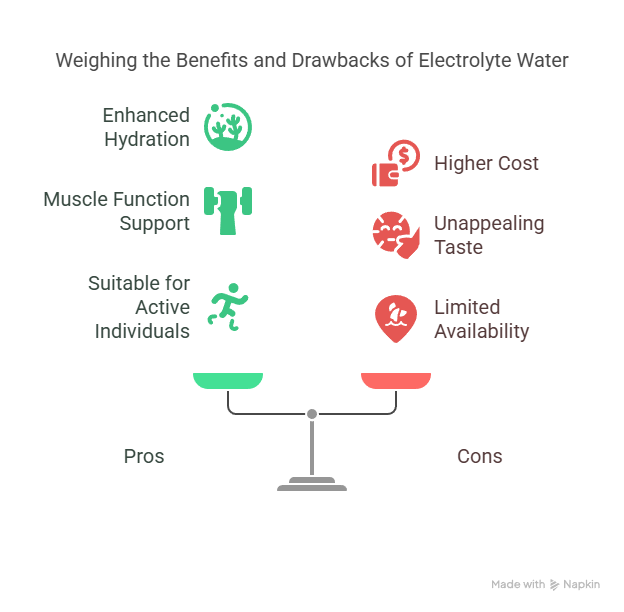
Electrolyte water is infused with essential minerals such as sodium, potassium, magnesium, and calcium, which play a crucial role in maintaining fluid balance, nerve function, and muscle contractions. This type of water is particularly beneficial during fasting periods, especially for individuals engaging in prolonged or intense physical activity.
Pros
– **Enhanced Hydration**: Replenishes electrolytes lost through sweat and urine, supporting optimal hydration levels.
– **Muscle Function Support**: Helps prevent muscle cramps and fatigue by maintaining electrolyte balance.
– **Suitable for Active Individuals**: Ideal for those who exercise during fasting, as it supports physical performance.
Cons
– **Cost**: Generally more expensive than plain water.
– **Taste**: Some individuals may find the mineral taste unappealing.
– **Availability**: May be less accessible in certain regions.
Overview of Plain Water

Plain water is the most basic form of hydration, free from calories, sugars, and additives. It is universally accessible and cost-effective, making it a staple for many during fasting periods.
Pros
– **Cost-Effective**: Widely available and inexpensive.
– **Neutral Taste**: Generally accepted by most individuals.
– **Universal Accessibility**: Available in most locations without restrictions.
Cons
– **Lacks Electrolytes**: Does not provide essential minerals needed during fasting.
– **Potential for Electrolyte Imbalance**: Extended fasting without electrolyte supplementation can lead to imbalances, causing symptoms like muscle cramps and fatigue.
Side-by-Side Breakdown
Electrolyte Content
Electrolyte water contains added minerals such as sodium, potassium, magnesium, and calcium, which are essential for maintaining fluid balance and muscle function during fasting. Plain water lacks these electrolytes, which can be a concern during extended fasting periods. ([medkitauthority.com](https://medkitauthority.com/electrolytes-while-fasting/?utm_source=openai))
Impact on Fasting State
Both electrolyte water and plain water are calorie-free and do not break a fast. However, it’s important to choose electrolyte supplements that are free from added sugars and calories to maintain the fasting state. ([themanual.com](https://www.themanual.com/fitness/do-electrolytes-break-a-fast/?utm_source=openai))
Health Benefits
Electrolyte water helps prevent dehydration, muscle cramps, and fatigue during fasting, especially for those engaging in intense physical activity. Plain water provides basic hydration but may not prevent electrolyte imbalances during extended fasting periods. ([doctorkiltz.com](https://www.doctorkiltz.com/electrolytes-for-fasting/?utm_source=openai))
Cost and Accessibility
Electrolyte water is generally more expensive and may be less accessible than plain water. However, electrolyte supplements can be added to plain water to achieve similar benefits. ([redmond.life](https://redmond.life/blogs/live-your-journey/how-can-i-replace-electrolytes-while-fasting?utm_source=openai))
Taste and Palatability
Electrolyte water may have a distinct taste due to added minerals, which some individuals may find unappealing. Plain water has a neutral taste and is widely accepted.
Which One Should You Choose?
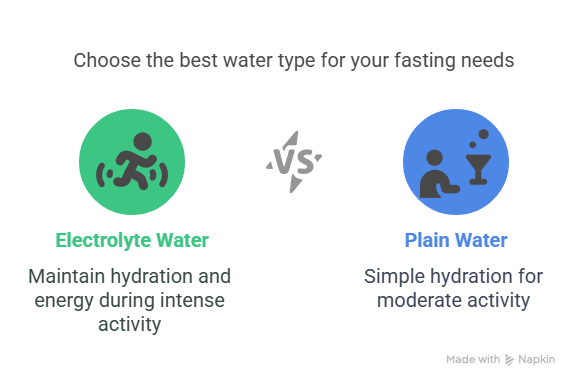
Your choice between electrolyte water and plain water during fasting depends on your individual needs and circumstances:
– **Electrolyte Water**: Best for individuals engaging in prolonged or intense physical activity during fasting periods, those experiencing symptoms of electrolyte imbalance, and individuals seeking to maintain optimal hydration and energy levels during fasting.
– **Plain Water**: Ideal for individuals practicing intermittent fasting with moderate activity levels, those without symptoms of electrolyte imbalance, and individuals seeking a simple, calorie-free hydration option during fasting.
Electrolyte Water vs Plain Water: The Final Verdict
| Category | Electrolyte Water | Plain Water |
|—————————-|—————————————————–|————————————————–|
| Best for Beginners | No | Yes |
| Best for Power Users | Yes | No |
| Best Value | No | Yes |
Findings and Recap
In summary, both electrolyte water and plain water have their place during fasting. Electrolyte water is beneficial for those engaging in intense physical activity or extended fasting periods, as it helps maintain electrolyte balance and prevent dehydration. Plain water is suitable for individuals practicing intermittent fasting with moderate activity levels, providing basic hydration without additional costs.
Related reading: Understanding Electrolyte Imbalance During Fasting
AI Image Prompt: A split-screen image showing a person drinking plain water on one side and electrolyte water on the other, with a backdrop of a fasting-related activity like exercise or meditation.
“`html
Frequently Asked Questions
What is the main difference between Electrolyte Water and Plain Water During Fasting?
The main difference lies in their electrolyte content. Electrolyte water contains essential minerals like sodium, potassium, and magnesium, which help maintain fluid balance and prevent dehydration during fasting. Plain water lacks these electrolytes, making it less effective in supporting hydration during extended periods without food.
Does drinking electrolyte water break a fast?
No, consuming electrolyte water does not break a fast, provided it contains no calories or added sugars. Electrolytes are minerals that support hydration and bodily functions without triggering an insulin response, thus maintaining the benefits of fasting. However, it’s important to choose electrolyte supplements that are free from calories and sugars to avoid disrupting the fasting state. ([themanual.com](https://www.themanual.com/fitness/do-electrolytes-break-a-fast/?utm_source=openai))
Can I drink plain water during fasting?
Yes, drinking plain water is essential during fasting to stay hydrated. However, plain water does not replenish electrolytes lost during fasting, which can lead to imbalances and symptoms like muscle cramps, fatigue, and dizziness. Therefore, incorporating electrolyte water or supplements can help maintain proper electrolyte balance during fasting periods. ([science.drinklmnt.com](https://science.drinklmnt.com/fasting/what-can-you-drink-while-fasting/?utm_source=openai))
How do electrolytes support the body during fasting?
Electrolytes are vital for various bodily functions, including nerve signaling, muscle contractions, and maintaining fluid balance. During fasting, electrolyte levels can drop due to reduced food intake and increased urination. Supplementing with electrolyte water helps replenish these minerals, supporting overall health and preventing symptoms associated with electrolyte deficiencies. ([doctorkiltz.com](https://www.doctorkiltz.com/electrolytes-for-fasting/?utm_source=openai))
Are there any risks associated with consuming electrolyte water during fasting?
While electrolyte water is beneficial during fasting, it’s important to choose products without added sugars or calories to avoid breaking the fast. Additionally, excessive intake of certain electrolytes can lead to imbalances and health issues. It’s advisable to follow recommended dosages and consult with a healthcare professional if you have underlying health conditions. ([fastingforwardcoach.com](https://fastingforwardcoach.com/can-i-drink-electrolytes-while-intermittent-fasting/?utm_source=openai))
Can I use sports drinks as an electrolyte source during fasting?
Most sports drinks contain added sugars and calories, which can break a fast and negate its benefits. It’s best to avoid these during fasting periods. Instead, opt for sugar-free electrolyte supplements or mineral water to maintain electrolyte balance without consuming calories. ([lighthome.in](https://www.lighthome.in/fasting/electrolyte-drinks-your-guide-to-successful-fasting/?utm_source=openai))
How can I ensure I’m getting enough electrolytes during fasting?
To maintain adequate electrolyte levels during fasting, consider incorporating sugar-free electrolyte supplements into your routine. These can be added to water to provide essential minerals without adding calories. Additionally, consuming mineral-rich water or homemade electrolyte drinks can help replenish lost electrolytes. Always choose products without added sugars or artificial sweeteners to avoid breaking the fast. ([fastic.com](https://fastic.com/en/blog/balancing-electrolytes-on-water-fast?utm_source=openai))
“`
