 Skip to content
Fasting for Fat Loss vs Muscle Definition: Which Is Right for You?
What You’ll Learn
In this article, we’ll delve into the key differences between two popular fitness approaches: ‘Fasting for Fat Loss’ and ‘Muscle Definition’. By the end, you’ll have a clear understanding of which method aligns best with your personal health and fitness objectives.
Quick Comparison Table
| Feature | Fasting for Fat Loss | Muscle Definition |
|---|---|---|
| Primary Focus | Fat loss through dietary strategies like intermittent fasting. | Muscle growth and fat loss through exercise and nutrition. |
| Risk of Muscle Loss | Potential for muscle loss if not managed with adequate protein intake and exercise. | Emphasis on muscle preservation and growth. |
| Accessibility | More accessible for individuals with time constraints. | Requires commitment to regular exercise routines. |
| Nutritional Requirements | Focus on caloric deficit and meal timing. | Emphasis on balanced diet with adequate protein intake. |
| Exercise Component | Minimal to no exercise required. | Regular exercise, particularly strength training, is essential. |
Overview of Fasting for Fat Loss
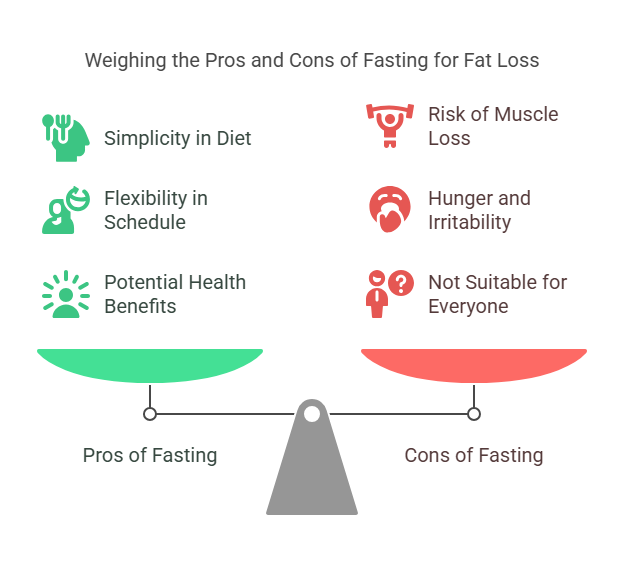
Fasting for Fat Loss primarily utilizes dietary strategies like intermittent fasting to induce a caloric deficit and promote fat loss. This approach involves cycles of eating and fasting periods, aiming to reduce overall calorie intake without the need for constant meal planning.
Pros
– **Simplicity**: No need to track calories or plan meals extensively.
– **Flexibility**: Can be adapted to various lifestyles and schedules.
– **Potential Health Benefits**: Some studies suggest intermittent fasting may improve metabolic health markers.
Cons
– **Risk of Muscle Loss**: Without proper management, fasting can lead to muscle loss. ([uhcancercenter.org](https://www.uhcancercenter.org/about-us/2020-news-articles/654-intermittent-fasting-study-find-dieters-shed-muscle-not-fat?utm_source=openai))
– **Hunger and Irritability**: Extended fasting periods may cause discomfort.
– **Not Suitable for Everyone**: Individuals with certain health conditions should consult a healthcare professional before starting.
Overview of Muscle Definition
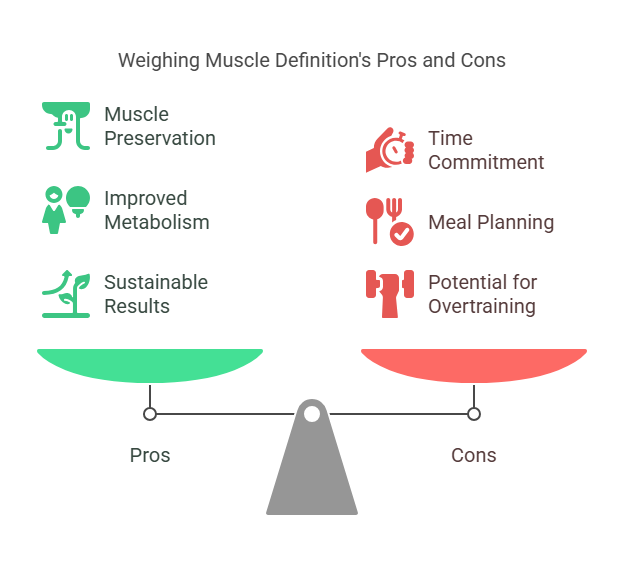
Muscle Definition focuses on muscle growth and fat loss through exercise and nutrition. This approach combines strength training with a balanced diet rich in protein to enhance muscle mass while reducing body fat.
Pros
– **Muscle Preservation**: Emphasizes maintaining and building muscle mass.
– **Improved Metabolism**: Increased muscle mass can boost metabolic rate.
– **Sustainable Results**: Combines exercise and nutrition for long-term success.
Cons
– **Time Commitment**: Requires regular exercise routines.
– **Meal Planning**: Necessitates careful dietary planning to ensure adequate protein intake.
– **Potential for Overtraining**: Without proper rest, intense workouts can lead to injury.
Side-by-Side Breakdown
Primary Focus
– **Fasting for Fat Loss**: Aims to reduce body fat through periods of fasting, potentially leading to weight loss.
– **Muscle Definition**: Seeks to enhance muscle definition by combining strength training with a balanced diet.
Risk of Muscle Loss
– **Fasting for Fat Loss**: Without adequate protein intake and exercise, fasting can result in muscle loss. ([uhcancercenter.org](https://www.uhcancercenter.org/about-us/2020-news-articles/654-intermittent-fasting-study-find-dieters-shed-muscle-not-fat?utm_source=openai))
– **Muscle Definition**: Focuses on muscle preservation and growth, minimizing the risk of muscle loss.
Accessibility
– **Fasting for Fat Loss**: More accessible for individuals with time constraints, as it doesn’t require regular exercise.
– **Muscle Definition**: Requires a commitment to regular exercise routines, which may be challenging for some.
Nutritional Requirements
– **Fasting for Fat Loss**: Focuses on caloric deficit and meal timing, with less emphasis on nutrient quality.
– **Muscle Definition**: Emphasizes a balanced diet with adequate protein intake to support muscle growth.
Exercise Component
– **Fasting for Fat Loss**: Minimal to no exercise required, making it suitable for those with limited time.
– **Muscle Definition**: Regular exercise, particularly strength training, is essential to achieve desired results.
Which One Should You Choose?
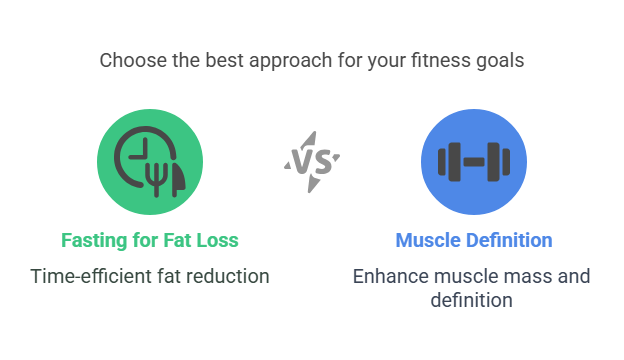
Your choice between Fasting for Fat Loss and Muscle Definition depends on your personal goals, lifestyle, and preferences.
– **Fasting for Fat Loss**: Ideal for individuals seeking a time-efficient method to reduce body fat without committing to regular exercise routines.
– **Muscle Definition**: Best suited for those aiming to enhance muscle mass and definition through a combination of exercise and nutrition.
Fasting for Fat Loss vs Muscle Definition: The Final Verdict
| Category | Fasting for Fat Loss | Muscle Definition |
|---|---|---|
| Best for Beginners | ✔️ | |
| Best for Power Users | ✔️ | |
| Best Value | ✔️ |
Findings and Recap
In summary, both Fasting for Fat Loss and Muscle Definition offer unique approaches to achieving fitness goals. Fasting for Fat Loss provides a time-efficient method to reduce body fat, while Muscle Definition focuses on building muscle mass through exercise and nutrition. Consider your personal objectives and lifestyle to determine which approach aligns best with your needs.
Ready to Transform Your Body?
Explore our comprehensive guides on Fasting for Fat Loss and Muscle Definition to kickstart your fitness journey today!
Related reading: Understanding Intermittent Fasting and Its Benefits
AI Image Prompt: A split-screen image showing a person practicing intermittent fasting on one side and engaging in strength training on the other, symbolizing the contrast between Fasting for Fat Loss and Muscle Definition approaches.
“`html
Frequently Asked Questions
What is the main difference between Fasting for Fat Loss and Muscle Definition?
Fasting for Fat Loss primarily focuses on reducing body fat through calorie restriction, while Muscle Definition emphasizes building and maintaining muscle mass to enhance muscle tone and appearance. Both approaches can be integrated, but they require different strategies and considerations.
Can intermittent fasting help preserve muscle mass during fat loss?
Yes, intermittent fasting can help preserve muscle mass during fat loss. Ensuring adequate protein intake and engaging in regular strength training are crucial to maintain muscle while losing fat. Studies have shown that intermittent fasting, when combined with resistance training, does not compromise muscular strength and can help preserve lean mass. ([pmc.ncbi.nlm.nih.gov](https://pmc.ncbi.nlm.nih.gov/articles/PMC8151159/?utm_source=openai))
How does intermittent fasting affect muscle growth?
Intermittent fasting can influence muscle growth in various ways. While short-term fasting may not significantly impact muscle mass, prolonged periods without adequate nutrition can hinder muscle protein synthesis. To support muscle growth during intermittent fasting, it’s essential to consume sufficient protein and engage in regular resistance training. ([pmc.ncbi.nlm.nih.gov](https://pmc.ncbi.nlm.nih.gov/articles/PMC9736182/?utm_source=openai))
Is it possible to lose fat and gain muscle simultaneously?
Yes, it is possible to lose fat and gain muscle simultaneously, a process known as body recomposition. This requires a combination of a balanced diet, adequate protein intake, and a structured exercise regimen that includes both strength training and cardiovascular activities. ([simple.life](https://simple.life/blog/fat-loss-vs-weight-loss/?utm_source=openai))
What role does protein intake play in fasting for fat loss and muscle definition?
Protein intake is vital in both fasting for fat loss and muscle definition. During periods of calorie restriction, consuming adequate protein helps preserve muscle mass and supports muscle repair and growth. It’s recommended to consume protein-rich foods or supplements during eating windows to maintain muscle health. ([healthline.com](https://www.healthline.com/nutrition/intermittent-fasting-muscle?utm_source=openai))
Can fasting lead to muscle loss?
Fasting can lead to muscle loss if not managed properly. To minimize muscle loss during fasting, it’s important to consume sufficient protein, engage in regular strength training, and avoid excessive calorie deficits. Research indicates that intermittent fasting, when combined with resistance training, does not compromise muscular strength and can help preserve lean mass. ([pmc.ncbi.nlm.nih.gov](https://pmc.ncbi.nlm.nih.gov/articles/PMC8151159/?utm_source=openai))
How can I effectively combine fasting with muscle-building exercises?
To effectively combine fasting with muscle-building exercises, ensure you consume adequate protein during your eating windows to support muscle repair and growth. Schedule strength training sessions during your feeding periods to provide your body with the necessary nutrients for optimal performance and recovery. ([kore-fit.com](https://www.kore-fit.com/post/intermittent-fasting-hype-vs-health-what-you-really-need-to-know?utm_source=openai))
“`
