 Skip to content
Intermittent Fasting vs. Calorie Counting: Which Method Works Best?
What You’ll Learn
In this article, we’ll delve into two popular weight loss strategies—Intermittent Fasting and Calorie Counting—to help you determine which approach aligns best with your lifestyle and health goals.
Quick Comparison Table
| Feature | Intermittent Fasting | Calorie Counting |
|---|---|---|
| Weight Loss Effectiveness | Similar weight loss results to calorie counting, with studies showing comparable outcomes over a year. | Achieves weight loss by maintaining a consistent calorie deficit through detailed tracking. |
| Sustainability and Lifestyle Compatibility | May be easier to adhere to due to reduced meal frequency and less emphasis on food tracking. | Requires continuous monitoring and recording of food intake, which can be time-consuming and challenging to maintain long-term. |
| Health Benefits Beyond Weight Loss | Potential improvements in insulin sensitivity and metabolic health due to structured eating patterns. | Encourages mindful eating habits and balanced nutrition, potentially leading to improved overall health. |
| Mental and Emotional Well-being | Simplifies dietary approach, reducing stress related to food choices and portion sizes. | Can lead to stress or anxiety around food, especially if individuals become overly fixated on numbers. |
Overview of Intermittent Fasting
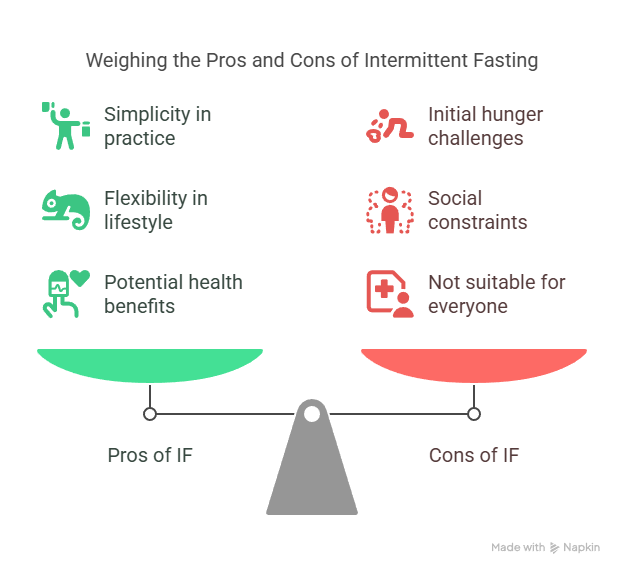
Intermittent Fasting (IF) involves alternating periods of eating and fasting, focusing on when you eat rather than what you eat. Common methods include the 16:8 approach, where you fast for 16 hours and eat during an 8-hour window.
Pros
– **Simplicity**: No need to track calories or measure portions.
– **Flexibility**: Can be adapted to various lifestyles and schedules.
– **Potential Health Benefits**: Studies suggest improvements in insulin sensitivity and metabolic health.
Cons
– **Initial Hunger**: Adjusting to fasting periods can be challenging.
– **Social Constraints**: May interfere with social events or family meals.
– **Not Suitable for Everyone**: Individuals with certain health conditions should consult a healthcare provider before starting IF.
Overview of Calorie Counting
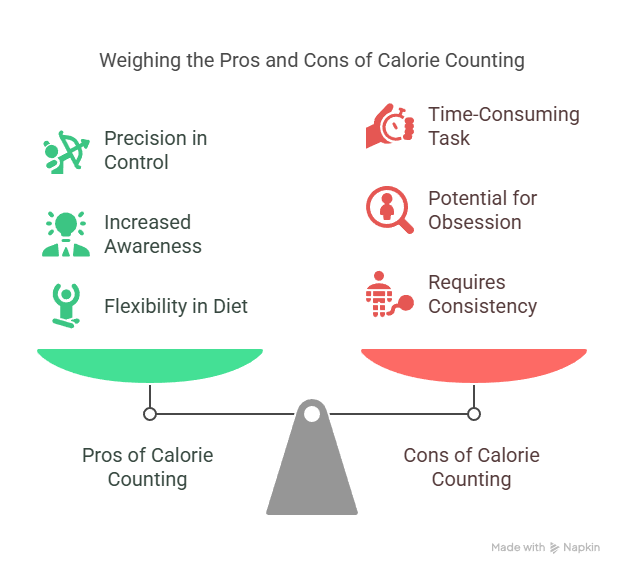
Calorie Counting involves tracking the calories consumed to ensure a deficit, leading to weight loss. This method requires meticulous recording of food intake, often using apps or food diaries.
Pros
– **Precision**: Allows for exact control over calorie intake.
– **Awareness**: Increases understanding of nutritional content in foods.
– **Flexibility**: No restrictions on food types, as long as calorie goals are met.
Cons
– **Time-Consuming**: Constant tracking can be tedious.
– **Potential for Obsession**: Overemphasis on numbers may lead to unhealthy relationships with food.
– **Requires Consistency**: Success depends on accurate and consistent tracking.
Side-by-Side Breakdown
Weight Loss Effectiveness
Both Intermittent Fasting and Calorie Counting have been shown to be effective for weight loss. A study published in the Annals of Internal Medicine found that both methods led to similar weight loss outcomes over a year. ([healthline.com](https://www.healthline.com/health-news/intermittent-fasting-or-calorie-counting-which-is-better-for-weight-loss?utm_source=openai))
Sustainability and Lifestyle Compatibility
Intermittent Fasting may be more sustainable for some individuals due to its simplicity and reduced need for tracking. However, it may not be suitable for everyone, especially those with certain health conditions. ([jamanetwork.com](https://jamanetwork.com/journals/jama/article-abstract/2807152?utm_source=openai))
Calorie Counting requires continuous monitoring, which can be time-consuming and challenging to maintain long-term. ([medicalnewstoday.com](https://www.medicalnewstoday.com/articles/intermittent-fasting-and-traditional-calorie-counting-about-equal-for-weight-loss?utm_source=openai))
Health Benefits Beyond Weight Loss
Intermittent Fasting has been linked to improved insulin sensitivity and metabolic health. ([healthline.com](https://www.healthline.com/health-news/intermittent-fasting-or-calorie-counting-which-is-better-for-weight-loss?utm_source=openai))
Calorie Counting encourages mindful eating habits and balanced nutrition, potentially leading to improved overall health. ([medicalnewstoday.com](https://www.medicalnewstoday.com/articles/intermittent-fasting-and-traditional-calorie-counting-about-equal-for-weight-loss?utm_source=openai))
Mental and Emotional Well-being
Intermittent Fasting simplifies dietary choices, reducing stress related to food decisions. However, it may lead to unhealthy relationships with food for some individuals. ([justaveragejen.com](https://www.justaveragejen.com/intermittent-fasting-vs-calories.html?utm_source=openai))
Calorie Counting can lead to stress or anxiety around food, especially if individuals become overly fixated on numbers. ([justaveragejen.com](https://www.justaveragejen.com/intermittent-fasting-vs-calories.html?utm_source=openai))
Which One Should You Choose?
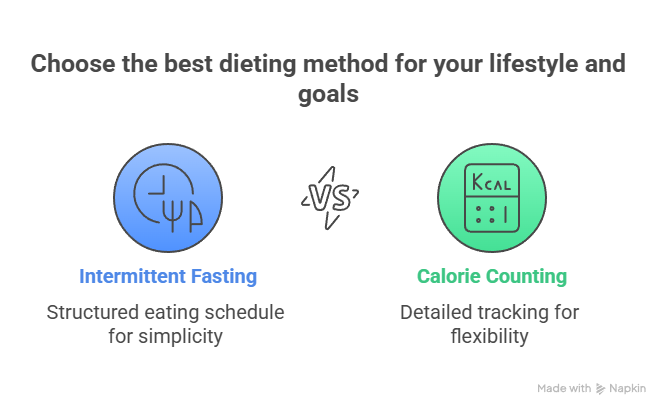
Your choice between Intermittent Fasting and Calorie Counting should align with your personal preferences, lifestyle, and health goals.
– **Intermittent Fasting**: Best for individuals seeking a structured eating schedule to reduce calorie intake without meticulous tracking, and those who prefer a simpler approach to dieting.
– **Calorie Counting**: Ideal for individuals who prefer detailed tracking of food intake, enjoy flexibility in food choices, and are comfortable with monitoring their daily caloric consumption.
Intermittent Fasting vs. Calorie Counting: The Final Verdict
| Category | Intermittent Fasting | Calorie Counting |
|——————————|———————-|——————|
| Best for Beginners | Yes | No |
| Best for Power Users | No | Yes |
| Best Value | Yes | No |
Findings and Recap
Both Intermittent Fasting and Calorie Counting are effective weight loss strategies, each with its own set of benefits and challenges. Your choice should depend on your personal preferences, lifestyle, and health considerations.
Ready to Start Your Weight Loss Journey?
Explore our comprehensive guides and resources to help you choose the best weight loss strategy for your needs.
Related reading: Understanding Intermittent Fasting: A Beginner’s Guide
AI Image Prompt: A split-screen image showing a person choosing between two weight loss methods: one side depicting a clock symbolizing intermittent fasting, and the other side showing a calculator and food items representing calorie counting, set in a modern kitchen environment.
“`html
Frequently Asked Questions
What is the main difference between Losing Weight with Fasting and Calorie Counting?
The primary distinction lies in their approach: Losing Weight with Fasting focuses on restricting the timing of food intake, such as through intermittent fasting, while Calorie Counting involves monitoring and limiting the number of calories consumed daily. Both methods aim to create a calorie deficit but differ in their strategies.
Which method is more effective for weight loss?
Recent studies indicate that both intermittent fasting and calorie counting can lead to similar weight loss outcomes. For instance, a study published in the Annals of Internal Medicine found that participants practicing time-restricted eating lost about 5% of their body weight over 12 months, comparable to those who reduced daily calorie intake by 25% ([healthline.com](https://www.healthline.com/health-news/intermittent-fasting-or-calorie-counting-which-is-better-for-weight-loss?utm_source=openai)).
Is intermittent fasting safe for everyone?
Intermittent fasting may not be suitable for everyone. Individuals with certain health conditions, such as diabetes, or those who are pregnant or breastfeeding should consult a healthcare professional before starting any fasting regimen. It’s essential to consider personal health status and consult with a healthcare provider to determine if intermittent fasting is appropriate.
Can I maintain muscle mass while losing weight with fasting?
Maintaining muscle mass during weight loss can be challenging, especially with extended fasting periods. To minimize muscle loss, it’s crucial to incorporate strength training exercises and ensure adequate protein intake. Consulting with a nutritionist or fitness expert can provide personalized guidance to preserve muscle mass during weight loss.
Which method is easier to follow in the long term?
The ease of adherence varies among individuals. Some find intermittent fasting more straightforward due to its simplicity, as it focuses on when to eat rather than what to eat. Others may prefer calorie counting for its structured approach. It’s important to choose a method that aligns with your lifestyle and is sustainable for you.
Are there any health benefits beyond weight loss with these methods?
Both intermittent fasting and calorie counting have been associated with health benefits beyond weight loss. Intermittent fasting may improve insulin sensitivity and support metabolic health. Calorie counting, by promoting mindful eating, can lead to better nutritional choices and overall health improvements. However, individual results may vary, and it’s advisable to consult with a healthcare provider for personalized advice.
Can I combine intermittent fasting with calorie counting?
Combining intermittent fasting with calorie counting is possible but may be complex. This approach would involve both restricting eating times and monitoring calorie intake. It’s essential to ensure that such a combination meets your nutritional needs and is sustainable. Consulting with a healthcare professional or nutritionist can help tailor a plan that suits your individual requirements.
“`
