 Skip to content
Intermittent Fasting vs Extended Fasting: Which Is Right for You?
What You’ll Learn
In this comprehensive comparison, we’ll delve into the key differences between Intermittent Fasting and Extended Fasting, examining aspects such as duration, health benefits, risks, sustainability, autophagy activation, hormonal impact, mental clarity, and nutrient intake. By the end, you’ll have a clear understanding of which fasting method aligns best with your health goals and lifestyle.
Quick Comparison Table
| Feature | Intermittent Fasting | Extended Fasting |
|---|---|---|
| Duration and Frequency | Regular cycles of fasting and eating (e.g., 16:8 method) | Prolonged periods without food, typically 24 hours or more |
| Health Benefits | Weight loss, improved insulin sensitivity, reduced inflammation | Enhanced autophagy, stem cell activation, deeper metabolic reset |
| Risks and Side Effects | Potential hunger, irritability, dizziness, headaches | Nutrient deficiencies, muscle loss, electrolyte imbalances, refeeding syndrome |
| Sustainability | Flexible and easier to integrate into daily life | Requires significant commitment and may disrupt daily routines |
| Autophagy Activation | Limited activation | Enhanced activation promoting cellular repair |
| Hormonal Impact | Minimal hormonal changes | Increased growth hormone levels |
| Mental Clarity | Improved focus during fasting periods | Enhanced mental clarity during extended fasts |
| Nutrient Intake | Regular nutrient intake during eating windows | Risk of nutrient deficiencies if not properly managed |
Overview of Intermittent Fasting
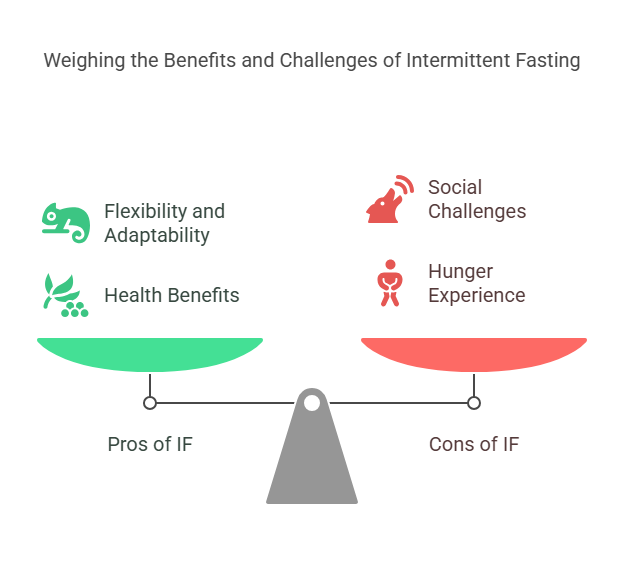
Intermittent Fasting (IF) involves alternating cycles of eating and fasting, with popular methods like the 16:8 approach, where you fast for 16 hours and eat during an 8-hour window. This method is known for its flexibility and ease of integration into daily life.
Pros
– **Flexibility**: Easily adaptable to various lifestyles and schedules.
– **Sustainability**: Generally more sustainable due to its flexibility.
– **Health Benefits**: Associated with weight loss, improved insulin sensitivity, and reduced inflammation.
Cons
– **Hunger**: Some individuals may experience hunger during fasting periods.
– **Social Challenges**: Skipping meals can conflict with social events or family gatherings.
Overview of Extended Fasting
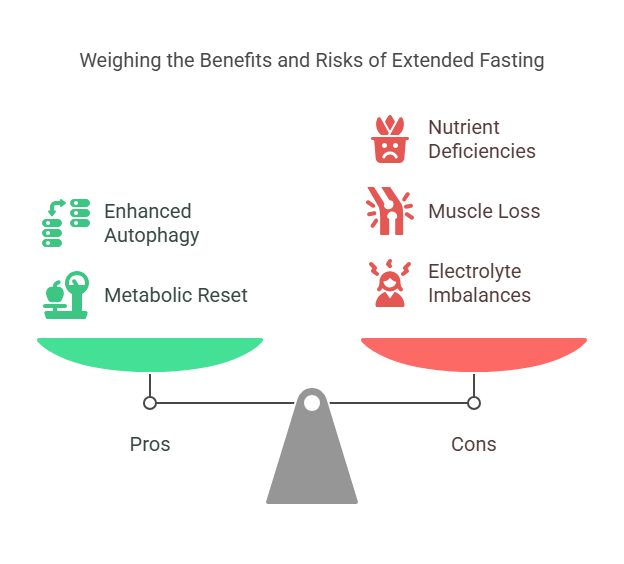
Extended Fasting involves prolonged periods without food, typically ranging from 24 to 72 hours. This method is often used for deeper metabolic resets and enhanced autophagy.
Pros
– **Enhanced Autophagy**: Promotes cellular repair and regeneration.
– **Metabolic Reset**: Can lead to significant weight loss and improved metabolic health.
Cons
– **Nutrient Deficiencies**: Prolonged fasting increases the risk of nutrient deficiencies if not properly managed.
– **Muscle Loss**: Extended periods without food can lead to muscle breakdown.
– **Electrolyte Imbalances**: Extended fasting can cause electrolyte imbalances, leading to dizziness and other health issues.
Side-by-Side Breakdown
Duration and Frequency
– **Intermittent Fasting**: Involves regular cycles of fasting and eating, such as the 16:8 method.
– **Extended Fasting**: Entails prolonged periods without food, typically 24 hours or more.
Health Benefits
– **Intermittent Fasting**: Associated with weight loss, improved insulin sensitivity, and reduced inflammation.
– **Extended Fasting**: May provide deeper benefits like enhanced autophagy and stem cell activation.
Risks and Side Effects
– **Intermittent Fasting**: Potential hunger, irritability, dizziness, and headaches.
– **Extended Fasting**: Higher risks including nutrient deficiencies, muscle loss, electrolyte imbalances, and refeeding syndrome.
Sustainability
– **Intermittent Fasting**: Generally more sustainable due to its flexibility.
– **Extended Fasting**: Requires significant commitment and may disrupt daily routines.
Autophagy Activation
– **Intermittent Fasting**: Limited activation.
– **Extended Fasting**: Enhanced activation promoting cellular repair.
Hormonal Impact
– **Intermittent Fasting**: Minimal hormonal changes.
– **Extended Fasting**: Increased growth hormone levels.
Mental Clarity
– **Intermittent Fasting**: Improved focus during fasting periods.
– **Extended Fasting**: Enhanced mental clarity during extended fasts.
Nutrient Intake
– **Intermittent Fasting**: Regular nutrient intake during eating windows.
– **Extended Fasting**: Risk of nutrient deficiencies if not properly managed.
Which One Should You Choose?
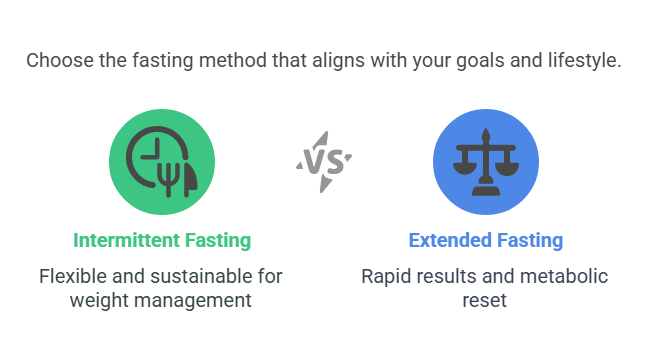
Choosing between Intermittent Fasting and Extended Fasting depends on your individual health goals, lifestyle, and ability to commit to a fasting regimen.
– **Intermittent Fasting**: Best for individuals seeking a flexible, sustainable approach to weight management and metabolic health.
– **Extended Fasting**: Ideal for those aiming for rapid weight loss or deeper metabolic resets, and who can commit to longer periods without food.
Intermittent Fasting vs Extended Fasting: The Final Verdict
| Category | Intermittent Fasting | Extended Fasting |
|---|---|---|
| Best for Beginners | ✔️ | |
| Best for Power Users | ✔️ | |
| Best Value | ✔️ |
Findings and Recap
Both Intermittent Fasting and Extended Fasting offer unique benefits and challenges. Your choice should align with your health objectives, lifestyle, and ability to adhere to a fasting regimen.
Related reading: Understanding the Science Behind Fasting
AI Image Prompt: A split-screen image showing a person enjoying a balanced meal on one side and another person meditating during a 24-hour fast on the other, symbolizing the contrast between Intermittent and Extended Fasting.
([pubmed.ncbi.nlm.nih.gov](https://pubmed.ncbi.nlm.nih.gov/40367516/?utm_source=openai), [boxrox.com](https://www.boxrox.com/intermittent-fasting-vs-prolonged-fasting-differences-pros-and-cons/?utm_source=openai), [fastingpioneer.com](https://fastingpioneer.com/extended-fasting-vs-intermittent-fasting-which-is-better/?utm_source=openai))
“`html
Frequently Asked Questions
What is the main difference between Intermittent Fasting and Extended Fasting?
Intermittent Fasting involves cycling between periods of eating and fasting, typically within a 16-24 hour window, and can be practiced daily or several times a week. Extended Fasting, on the other hand, involves abstaining from food for longer periods, usually 48 hours to 7 days, and is less frequent, often once a month or even less. ([lasta.app](https://lasta.app/intermittent-fasting-vs-prolonged-fasting/?utm_source=openai))
Which fasting method is more suitable for beginners?
Intermittent Fasting is generally easier to integrate into daily life and is more suitable for beginners. It allows for flexibility and can be adjusted to fit individual schedules, making it a more accessible option for those new to fasting. ([lasta.app](https://lasta.app/intermittent-fasting-vs-prolonged-fasting/?utm_source=openai))
Can both fasting methods aid in weight loss?
Yes, both Intermittent Fasting and Extended Fasting can be effective for weight loss. Intermittent Fasting promotes fat burning by lowering insulin levels and is easier to adopt long-term. Extended Fasting may lead to greater metabolic changes by promoting ketosis and increased fat burning, but it requires more discipline and is less sustainable for daily practice. ([ketodiettoday.com](https://ketodiettoday.com/intermittent-fasting-vs-prolonged-fasting-benefits/?utm_source=openai))
Are there any risks associated with Extended Fasting?
Extended Fasting can lead to potential risks such as nutrient deficiencies, muscle loss, dizziness, and fatigue. It is highly recommended to undergo medical supervision during prolonged fasting periods to mitigate these risks. ([lasta.app](https://lasta.app/intermittent-fasting-vs-prolonged-fasting/?utm_source=openai))
Which fasting method is better for improving insulin sensitivity?
Both Intermittent Fasting and Extended Fasting can improve insulin sensitivity. Intermittent Fasting offers a more balanced lifestyle change and is easier to follow, while Extended Fasting may provide more significant metabolic shifts but is generally harder to maintain. ([lasta.app](https://lasta.app/intermittent-fasting-vs-prolonged-fasting/?utm_source=openai))
Is it safe to practice Extended Fasting without medical supervision?
Extended Fasting should be approached with caution and is not recommended without medical supervision. It is advisable to consult with a healthcare professional before undertaking prolonged fasting periods to ensure safety and address any potential health concerns. ([lasta.app](https://lasta.app/intermittent-fasting-vs-prolonged-fasting/?utm_source=openai))
Can Intermittent Fasting be maintained long-term?
Yes, Intermittent Fasting is generally easier to maintain long-term due to its flexibility and adaptability to various lifestyles. It allows individuals to incorporate fasting into their daily routines without significant disruption. ([lasta.app](https://lasta.app/intermittent-fasting-vs-prolonged-fasting/?utm_source=openai))
“`
