 Skip to content
Morning Fasting vs Evening Fasting: Which Is Right for You?
What You’ll Learn
In this article, we’ll delve into the differences between morning and evening fasting, examining their metabolic impacts, effects on insulin sensitivity, fat oxidation, circadian rhythm alignment, appetite regulation, sleep quality, and social considerations. By the end, you’ll have a clear understanding of which fasting approach aligns best with your health goals and lifestyle.
Quick Comparison Table
| Feature | Morning Fasting | Evening Fasting |
|---|---|---|
| Metabolic Impact | Enhanced fat oxidation and insulin sensitivity during the day. | Potential disruption of circadian rhythms leading to decreased insulin sensitivity. |
| Appetite Regulation | Reduced hunger and cravings during the day. | Potential for increased evening hunger and cravings. |
| Sleep Quality | Improved sleep quality due to earlier meal times. | Potential disruption of sleep due to late-night eating. |
| Social and Lifestyle Considerations | Easier to align with social events and family meals. | May conflict with social events and family meals. |
Overview of Morning Fasting
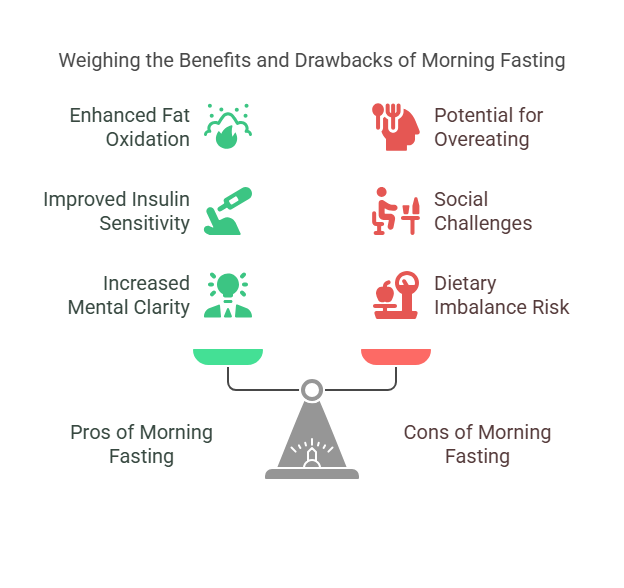
Morning fasting involves delaying the first meal of the day, typically until after 12:00 PM. This approach aligns with the body’s natural circadian rhythms, potentially enhancing metabolism and fat burning during daylight hours.
Pros
– **Enhanced Fat Oxidation**: Studies suggest that delaying the first meal can increase fat oxidation, aiding in weight management. ([onlinelibrary.wiley.com](https://onlinelibrary.wiley.com/doi/full/10.1111/nbu.12467?utm_source=openai))
– **Improved Insulin Sensitivity**: Morning fasting may lead to better insulin sensitivity, reducing the risk of type 2 diabetes. ([onlinelibrary.wiley.com](https://onlinelibrary.wiley.com/doi/full/10.1111/nbu.12467?utm_source=openai))
– **Increased Mental Clarity**: Many individuals report heightened focus and cognitive performance during the morning fasting period.
Cons
– **Potential for Overeating**: Skipping breakfast might lead to increased hunger later in the day, potentially resulting in overeating during subsequent meals.
– **Social Challenges**: Morning fasting can interfere with social events or family meals that occur during traditional breakfast hours.
Overview of Evening Fasting
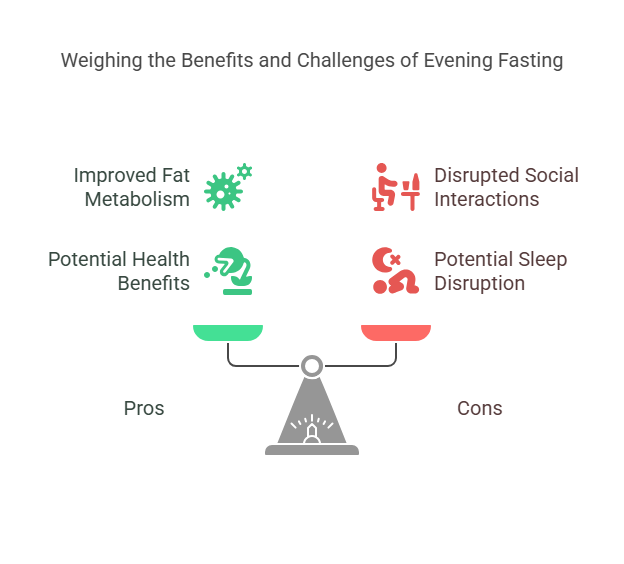
Evening fasting involves consuming the last meal of the day earlier, typically before 6:00 PM, and abstaining from food until the following morning. This method aims to extend the overnight fasting period, potentially improving fat metabolism during sleep.
Pros
– **Improved Fat Metabolism**: Evening fasting may enhance fat oxidation during the night, contributing to weight loss. ([news.vanderbilt.edu](https://news.vanderbilt.edu/2020/02/27/fasting-at-night-or-in-the-morning-listen-to-your-biological-clock-says-new-research/?utm_source=openai))
– **Potential Health Benefits**: Aligning eating patterns with circadian rhythms could lead to improved metabolic health and reduced inflammation. ([time.com](https://time.com/7199885/is-intermittent-fasting-good-for-you/?utm_source=openai))
Cons
– **Disrupted Social Interactions**: Early evening fasting can conflict with social gatherings or family dinners, making it challenging to maintain.
– **Potential Sleep Disruption**: For some, consuming the last meal too early may lead to evening hunger, potentially affecting sleep quality.
Side-by-Side Breakdown
Metabolic Impact
– **Morning Fasting**: Aligns with the body’s natural metabolic peak, potentially enhancing fat oxidation and insulin sensitivity during the day.
– **Evening Fasting**: May disrupt circadian rhythms, leading to decreased insulin sensitivity and potential weight gain. ([news.vanderbilt.edu](https://news.vanderbilt.edu/2020/02/27/fasting-at-night-or-in-the-morning-listen-to-your-biological-clock-says-new-research/?utm_source=openai))
Appetite Regulation
– **Morning Fasting**: Skipping breakfast can impair cognitive function and lead to overeating later in the day. ([time.com](https://time.com/4786181/skipping-breakfast-health-benefits/?utm_source=openai))
– **Evening Fasting**: Skipping dinner may cause evening energy crashes and disrupt sleep hormones.
Sleep Quality
– **Morning Fasting**: Improved sleep quality due to earlier meal times.
– **Evening Fasting**: Potential disruption of sleep due to late-night eating.
Social and Lifestyle Considerations
– **Morning Fasting**: Easier to align with social events and family meals.
– **Evening Fasting**: May conflict with social events and family meals.
Which One Should You Choose?
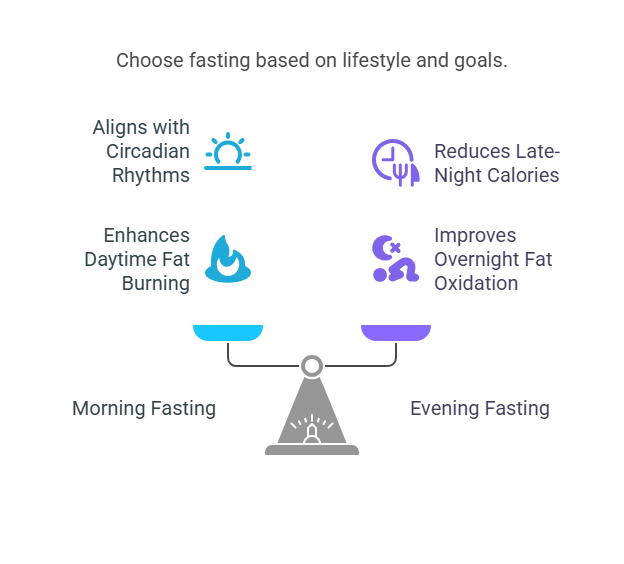
Your choice between morning and evening fasting should align with your personal health goals, lifestyle, and daily schedule.
– **Morning Fasting**: Ideal for individuals seeking to align eating patterns with natural circadian rhythms, aiming to enhance metabolism and fat burning during the day.
– **Evening Fasting**: Suitable for people who prefer to skip dinner, aiming to reduce late-night calorie intake and potentially improve overnight fat oxidation.
Morning Fasting vs Evening Fasting: The Final Verdict
| Category | Morning Fasting | Evening Fasting |
|---|---|---|
| Best for Beginners | ✔️ | |
| Best for Power Users | ✔️ | |
| Best Value | ✔️ |
Findings and Recap
Both morning and evening fasting offer unique benefits and challenges. Morning fasting may be more suitable for individuals with high morning cortisol levels or stress-related conditions, while evening fasting may be more appropriate for those with high evening cortisol levels or stress-related conditions. Consider your personal health goals, lifestyle, and daily schedule when choosing the best approach for you.
Ready to take control of your health? Explore our recommended fasting programs to find the perfect fit for your lifestyle.
Related reading: Understanding Intermittent Fasting: A Comprehensive Guide
AI Image Prompt: A split-screen image showing a person enjoying a healthy breakfast on one side and a person having a light dinner on the other, symbolizing morning and evening fasting.
“`html
Frequently Asked Questions
What is the main difference between Morning Fasting and Evening Fasting?
Morning Fasting involves delaying the first meal of the day until later in the morning or early afternoon, while Evening Fasting entails consuming the last meal of the day earlier in the evening, thereby extending the overnight fasting period. The primary distinction lies in the timing of the fasting window, which can influence metabolic processes and health outcomes. ([onlinelibrary.wiley.com](https://onlinelibrary.wiley.com/doi/full/10.1111/nbu.12467?utm_source=openai))
How does Morning Fasting affect metabolism?
Morning Fasting may enhance fat oxidation and improve insulin sensitivity due to the body’s heightened metabolic response during the early hours. This approach aligns with the body’s natural circadian rhythms, potentially leading to more efficient energy utilization and weight management. ([onlinelibrary.wiley.com](https://onlinelibrary.wiley.com/doi/full/10.1111/nbu.12467?utm_source=openai))
What are the benefits of Evening Fasting?
Evening Fasting can improve sleep quality by reducing late-night eating, which may disrupt sleep patterns. Additionally, it may help regulate appetite and reduce late-night snacking, contributing to better weight management and overall health. ([torrinomedica.it](https://www.torrinomedica.it/english/dietology/intermittent-fasting/is-it-better-to-fast-in-the-morning-or-at-night/?utm_source=openai))
Which fasting method is more effective for weight loss?
Both Morning and Evening Fasting can be effective for weight loss, but their success largely depends on individual lifestyle, preferences, and how well the fasting schedule aligns with one’s daily routine. It’s important to choose a method that is sustainable and suits your personal habits. ([quantafitness.com](https://quantafitness.com/articles/optimal-timing-intermittent-fasting/?utm_source=openai))
Can fasting at night disrupt sleep patterns?
Fasting at night, especially if it involves consuming large meals close to bedtime, can disrupt sleep patterns. It’s advisable to finish eating at least three hours before going to bed to allow the body to digest food properly and promote better sleep quality. ([news.vanderbilt.edu](https://news.vanderbilt.edu/2020/02/27/fasting-at-night-or-in-the-morning-listen-to-your-biological-clock-says-new-research/?utm_source=openai))
Is it better to skip breakfast or dinner for fasting?
Skipping breakfast may lead to increased hunger and potential overeating later in the day, while skipping dinner can extend the overnight fasting period, potentially improving metabolic health. The choice depends on individual preferences and how the fasting schedule fits into one’s lifestyle. ([indianexpress.com](https://indianexpress.com/web-stories/life-style/breakfast-vs-dinner-which-meal-should-you-skip-while-fasting/9721040/?utm_source=openai))
How do circadian rhythms influence fasting effectiveness?
Circadian rhythms regulate various bodily functions, including metabolism and hormone release. Aligning fasting periods with these natural cycles can enhance metabolic efficiency and improve health outcomes. For instance, fasting during the body’s natural metabolic peak in the morning may be more effective for weight management. ([firstforwomen.com](https://www.firstforwomen.com/weight-loss/nutrition/circadian-rhythm-fasting?utm_source=openai))
“`
