 Skip to content
One Week Fasting vs One Month Fasting Results: Which Is Right for You?
What You’ll Learn
In this comprehensive comparison, we’ll delve into the key differences between One Week Fasting and One Month Fasting Results. By the end, you’ll have a clear understanding of which fasting method aligns best with your health objectives.
Quick Comparison Table
| Feature | One Week Fasting | One Month Fasting Results |
|---|---|---|
| Fasting Duration | One day per week | Multiple days per month |
| Weight Loss Potential | Moderate | Significant |
| Health Benefits | Improved insulin sensitivity, reduced inflammation | Enhanced autophagy, improved heart health, reduced cancer risk |
| Metabolic Effects | Increased fat burning | Enhanced fat burning, improved metabolic rate |
| Sustainability | Easier to integrate into weekly routine | Requires more commitment and planning |
Overview of One Week Fasting
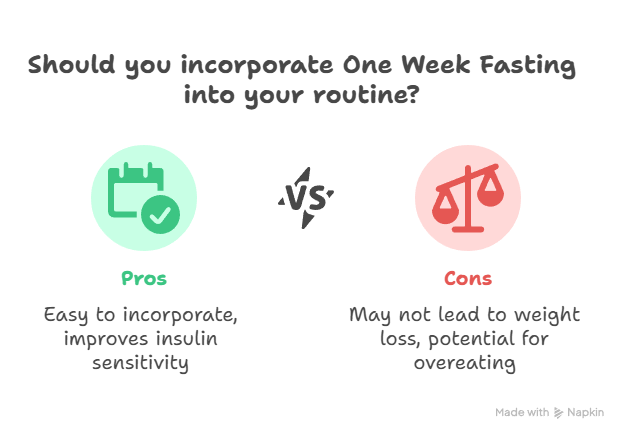
One Week Fasting involves fasting for one day each week, typically abstaining from food for 24 hours. This method is often chosen by individuals seeking short-term health benefits, those with busy schedules, or beginners exploring fasting.
Pros
- Easy to incorporate into a weekly routine
- May improve insulin sensitivity and reduce inflammation
- Less disruptive to daily life and social activities
Cons
- May not lead to significant weight loss
- Potential for overeating on non-fasting days
- May not provide deep metabolic benefits
Overview of One Month Fasting Results
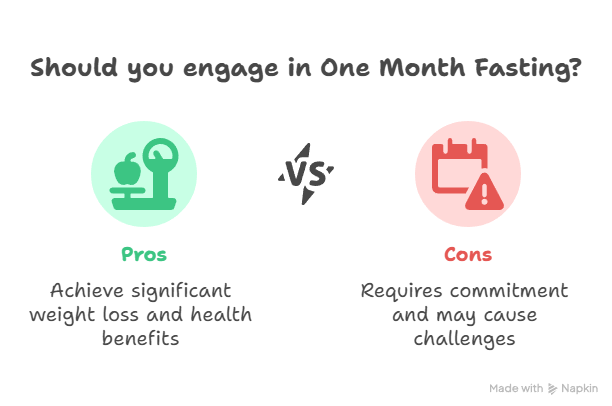
One Month Fasting entails fasting multiple times over a month, often involving longer fasting periods. This approach is typically pursued by individuals aiming for significant weight loss, those with experience in fasting, or those seeking long-term health improvements.
Pros
- Potential for substantial weight loss
- May enhance autophagy and improve heart health
- Can lead to deeper metabolic changes
Cons
- Requires more commitment and planning
- May be challenging to sustain over time
- Potential for nutrient deficiencies if not managed properly
Side-by-Side Breakdown
Fasting Duration
One Week Fasting involves fasting for one day per week, while One Month Fasting Results require fasting multiple days over a month. The longer fasting periods in One Month Fasting may lead to more significant health benefits but also require greater commitment.
Weight Loss Potential
Extended fasting periods, as seen in One Month Fasting Results, may lead to more substantial weight loss compared to shorter fasting durations. However, this approach requires careful planning and may not be suitable for everyone.
Health Benefits
Both methods offer health benefits, but prolonged fasting may provide more significant effects. For instance, extended fasting periods can enhance autophagy, improve heart health, and reduce cancer risk. ([indianexpress.com](https://indianexpress.com/article/lifestyle/health/fasting-health-benefits-heart-health-brain-function-immune-system-8210754/?utm_source=openai))
Metabolic Effects
Longer fasting periods can lead to deeper metabolic changes, including enhanced fat burning and improved metabolic rate. ([link.springer.com](https://link.springer.com/article/10.1186/s12937-022-00790-0?utm_source=openai))
Sustainability
Shorter fasting periods may be easier to maintain over time, making them more suitable for individuals with busy schedules or those new to fasting.
Which One Should You Choose?
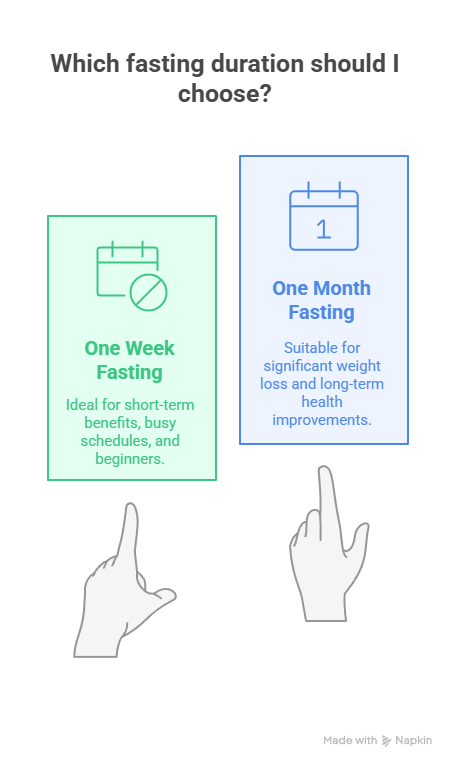
Your choice between One Week Fasting and One Month Fasting Results should align with your health goals, lifestyle, and experience with fasting.
– **One Week Fasting**: Ideal for individuals seeking short-term health benefits, those with busy schedules, or beginners exploring fasting.
– **One Month Fasting Results**: Suitable for individuals aiming for significant weight loss, those with experience in fasting, or those seeking long-term health improvements.
One Week Fasting vs One Month Fasting Results: The Final Verdict
| Category | One Week Fasting | One Month Fasting Results |
|---|---|---|
| Best for Beginners | ✔️ | |
| Best for Power Users | ✔️ | |
| Best Value | ✔️ |
Findings and Recap
In summary, both One Week Fasting and One Month Fasting Results offer unique benefits. Your choice should depend on your individual health goals, lifestyle, and experience with fasting.
Ready to embark on your fasting journey? Explore our recommended programs to get started today!
Related reading: Understanding the Science Behind Fasting
AI Image Prompt: A split-screen image showing a person fasting for one day on one side and fasting for multiple days on the other, with visual indicators of health benefits like improved insulin sensitivity and enhanced autophagy.
“`html
Frequently Asked Questions
What is the main difference between One Week Fasting and One Month Fasting Results?
The primary distinction lies in the duration and depth of metabolic changes. One Week Fasting typically leads to initial weight loss and improved insulin sensitivity, while One Month Fasting can result in more significant weight loss, enhanced fat metabolism, and increased autophagy, promoting cellular repair and longevity. ([indianexpress.com](https://indianexpress.com/article/lifestyle/health/fasting-health-benefits-heart-health-brain-function-immune-system-8210754/?utm_source=openai))
How much weight can I expect to lose with One Week Fasting?
During a one-week fasting regimen, individuals may experience minor weight fluctuations, often around 1-2 pounds, primarily due to water loss. This period sets the foundation for metabolic changes that lead to sustainable results in the following weeks. ([lasta.app](https://lasta.app/16-8-fasting-results-1-month/?utm_source=openai))
What are the health benefits of fasting for one month?
Engaging in a one-month fasting regimen can lead to significant weight loss, improved energy levels, enhanced mental clarity, and better insulin sensitivity. Additionally, it may stimulate autophagy, a cellular repair process that removes damaged cells and regenerates new ones, contributing to overall health. ([wellwisp.com](https://wellwisp.com/fasting-results-1-month/?utm_source=openai))
Are there any risks associated with prolonged fasting?
Yes, prolonged fasting can lead to potential risks such as nutrient deficiencies, muscle loss, slowed metabolism, hormonal imbalances, fatigue, and the risk of overeating after the fasting period. It’s crucial to approach extended fasting with caution and under medical supervision. ([wp.nyu.edu](https://wp.nyu.edu/discovers/2025/02/15/discover-how-long-you-should-fast-for-maximum-weight-loss-results/?utm_source=openai))
How does fasting affect brain function?
Fasting can enhance brain function by increasing blood flow to the brain, improving focus, and promoting the generation of new ideas. Additionally, fasting stimulates autophagy, which helps in the removal of damaged cells and supports overall brain health. ([indianexpress.com](https://indianexpress.com/article/lifestyle/health/fasting-health-benefits-heart-health-brain-function-immune-system-8210754/?utm_source=openai))
Can fasting improve heart health?
Yes, fasting can improve heart health by reducing inflammation, lowering triglyceride levels, and improving cholesterol profiles. It also helps in reducing insulin resistance, which is beneficial for cardiovascular health. ([indianexpress.com](https://indianexpress.com/article/lifestyle/health/fasting-health-benefits-heart-health-brain-function-immune-system-8210754/?utm_source=openai))
Is it safe to fast for extended periods without medical supervision?
Fasting for extended periods without medical supervision is not recommended due to potential health risks such as nutrient deficiencies, muscle loss, and hormonal imbalances. It’s essential to consult with a healthcare professional before undertaking prolonged fasting. ([wp.nyu.edu](https://wp.nyu.edu/discovers/2025/02/15/discover-how-long-you-should-fast-for-maximum-weight-loss-results/?utm_source=openai))
“`
