 Skip to content
Social Eating vs Fasting Commitment: Which Approach Suits You?
What You’ll Learn
In this article, we’ll delve into:
– The primary focus and target audience of Social Eating and Fasting Commitment.
– A detailed comparison of their features, pricing, and use cases.
– Insights into user experiences and technical specifications.
– Guidance on choosing the right approach based on your personal goals.
Quick Comparison Table
| Feature | Social Eating | Fasting Commitment |
|---|---|---|
| Primary Focus | Enhancing social connections through shared eating experiences. | Improving adherence to time-restricted eating via commitment devices and support systems. |
| Target Audience | Individuals seeking to strengthen social bonds through communal meals. | Individuals aiming to maintain fasting schedules with external accountability. |
| Pricing Structure | Typically free; may involve costs for group meals or events. | Costs may include fees for commitment device programs or support system services. |
| Use Cases | Social gatherings, community events, family meals. | Adhering to intermittent fasting schedules, weight loss programs. |
| Technical Specifications | N/A | Utilizes commitment devices, text message reminders, and support systems. |
| User Experience | Socially engaging, fosters community bonds. | Requires discipline, may involve external monitoring. |
Overview of Social Eating
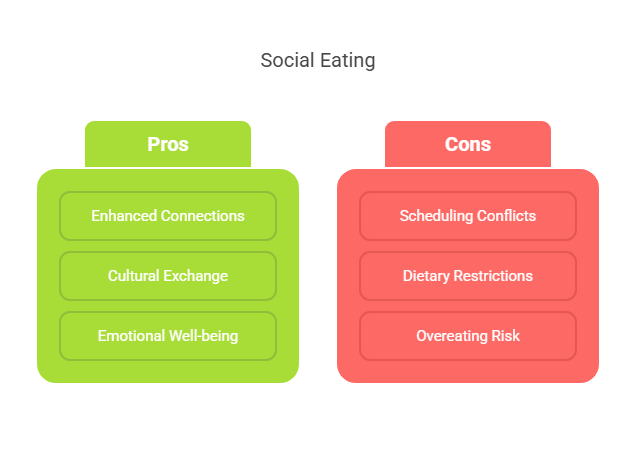
Social Eating focuses on bringing people together through shared meals, aiming to strengthen social bonds and enhance mental resilience. This approach leverages communal dining to foster a sense of community and collective purpose among participants.
Pros
– **Enhanced Social Connections**: Participating in group meals can lead to increased empathy and improved communication among individuals.
– **Cultural Exchange**: Shared meals provide opportunities to experience diverse cuisines and traditions, enriching personal and cultural understanding.
– **Emotional Well-being**: Engaging in communal dining can reduce stress and promote feelings of unity and support.
Cons
– **Scheduling Conflicts**: Coordinating group meals can be challenging, especially with busy individual schedules.
– **Dietary Restrictions**: Accommodating various dietary needs within a group setting may require additional planning and resources.
– **Potential for Overeating**: Social gatherings centered around food can sometimes lead to excessive consumption, which may not align with personal health goals.
Overview of Fasting Commitment
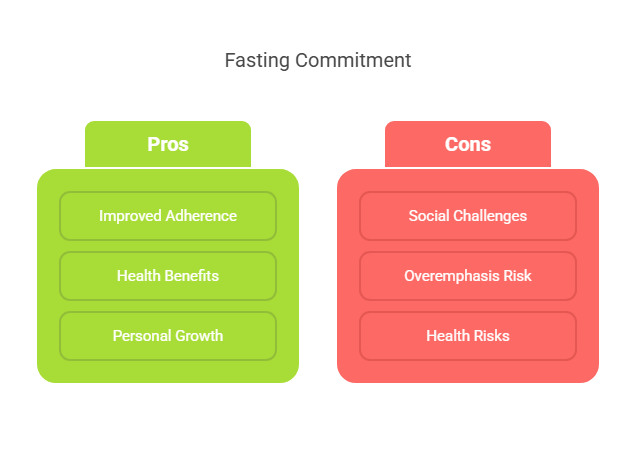
Fasting Commitment involves structured time-restricted eating plans supported by commitment devices and support systems to enhance adherence. This approach is designed to help individuals maintain fasting schedules through external accountability and motivation.
Pros
– **Improved Adherence**: Utilizing commitment devices and support systems can increase the likelihood of sticking to fasting schedules.
– **Health Benefits**: Time-restricted eating has been associated with weight loss, improved metabolic health, and enhanced mental clarity.
– **Personal Growth**: The discipline required in fasting can lead to increased self-awareness and personal development.
Cons
– **Social Challenges**: Fasting may interfere with social events and communal meals, potentially leading to feelings of isolation.
– **Potential for Overemphasis**: Focusing too much on fasting schedules may lead to neglect of other important aspects of health and well-being.
– **Health Risks**: Improper fasting practices can lead to negative health outcomes, especially if not monitored properly.
Side-by-Side Breakdown
Primary Focus
Social Eating emphasizes communal dining to strengthen social bonds, while Fasting Commitment focuses on enhancing adherence to time-restricted eating through commitment devices and support systems.
Target Audience
Social Eating is best suited for individuals seeking to enhance social connections and mental resilience through shared eating experiences. Fasting Commitment is ideal for those aiming to improve adherence to time-restricted eating through commitment devices and support systems.
Pricing Structure
Social Eating is typically free, with potential costs associated with group meals or events. Fasting Commitment may involve fees for commitment device programs or support system services.
Use Cases
Social Eating is suitable for social gatherings, community events, and family meals. Fasting Commitment is applicable for adhering to intermittent fasting schedules and weight loss programs.
Technical Specifications
Social Eating does not require specific technical specifications. Fasting Commitment utilizes commitment devices, text message reminders, and support systems to enhance adherence.
User Experience
Social Eating offers a socially engaging experience that fosters community bonds. Fasting Commitment requires discipline and may involve external monitoring to maintain adherence.
Which One Should You Choose?
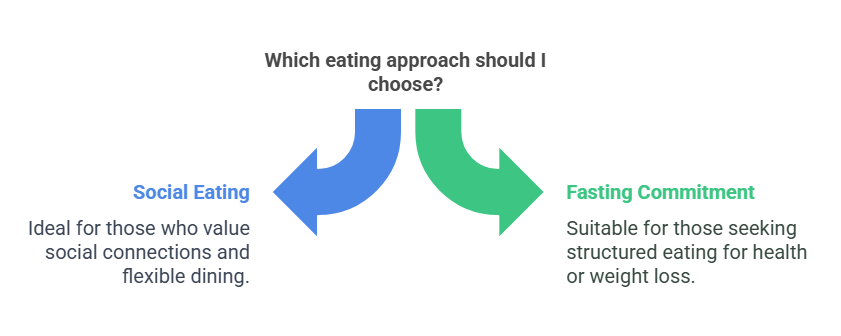
Your choice between Social Eating and Fasting Commitment depends on your personal goals and lifestyle:
– **Choose Social Eating if**:
– You value communal dining and wish to strengthen social connections.
– You seek to enhance mental resilience through shared eating experiences.
– You prefer a flexible approach to eating that accommodates social events.
– **Choose Fasting Commitment if**:
– You aim to adhere to time-restricted eating schedules for health or weight loss purposes.
– You benefit from external accountability and structured support systems.
– You are comfortable with the discipline required in fasting practices.
Social Eating vs Fasting Commitment: The Final Verdict
| Category | Social Eating | Fasting Commitment |
|————————–|——————————————————————————-|————————————————————————————-|
| Best for Beginners | Yes, especially those seeking to enhance social connections through shared meals. | Yes, for individuals aiming to improve adherence to time-restricted eating. |
| Best for Power Users | No, may not provide the structure needed for strict dietary goals. | Yes, offers structured support for maintaining fasting schedules. |
| Best Value | Yes, typically free with potential costs for group meals or events. | Yes, considering the health benefits and support provided. |
Findings and Recap
Both Social Eating and Fasting Commitment offer unique approaches to health and social engagement. Social Eating is ideal for those looking to strengthen social bonds and enhance mental resilience through communal dining. Fasting Commitment suits individuals aiming to adhere to time-restricted eating schedules with the support of commitment devices and external accountability.
Related reading: Understanding Intermittent Fasting
AI Image Prompt: A split-screen image showing a group of people enjoying a communal meal on one side and an individual engaging in a solitary fasting routine on the other, symbolizing the contrast between Social Eating and Fasting Commitment.
“`html
Frequently Asked Questions
What is the main difference between Social Eating and Fasting Commitment?
Social Eating focuses on communal dining experiences to strengthen social bonds, while Fasting Commitment emphasizes personal discipline through scheduled periods of food abstention to achieve health benefits.
To adhere to your fasting routine during social events, consider adjusting your eating window to accommodate gatherings, engaging in non-food-related activities, and communicating your fasting goals to friends and family for support. ([lifesum.com](https://lifesum.com/nutrition-explained/how-to-navigate-social-situations-while-fasting?utm_source=openai))
Yes, you can enjoy social meals by planning ahead, choosing fasting-friendly options, and focusing on the social aspects of the gathering rather than solely on food. ([fastingpioneer.com](https://fastingpioneer.com/tips-for-managing-social-interactions-while-extended-fasting/?utm_source=openai))
Fasting can influence social interactions by requiring adjustments to traditional communal meals. Open communication and flexibility are key to maintaining social connections while adhering to fasting practices. ([questionsgeek.com](https://www.questionsgeek.com/questions/how-does-intermittent-fasting-affect-social-dynamics-communal-meals-and-cultural-traditions-centered-around-food-consumption/?utm_source=openai))
Effective strategies include planning your fasting schedule around social events, practicing mindful eating, and seeking support from friends and family to maintain your commitment. ([lighthome.in](https://www.lighthome.in/fasting/social-support-your-key-to-a-successful-fasting-journey/?utm_source=openai))
Can fasting lead to a healthier relationship with food?
Yes, fasting can promote a mindful relationship with food by encouraging awareness of hunger cues and reducing emotional eating, leading to healthier eating habits. ([medium.com](https://medium.com/%40themontay/the-art-of-fasting-nurturing-a-mindful-relationship-with-food-9a41d93aad53?utm_source=openai))
How can I find support for my fasting journey?
Joining online communities, seeking accountability partners, and engaging with healthcare professionals can provide valuable support and guidance during your fasting journey. ([timerestrictedeats.com](https://www.timerestrictedeats.com/fasting-information/intermittent-fasting-community-support-for-effective-accountability-networks/?utm_source=openai))
“`
